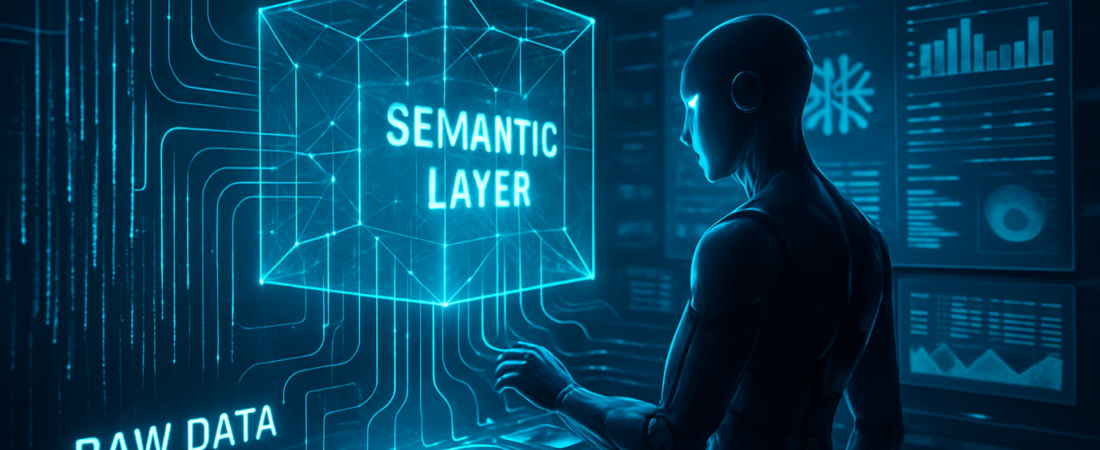
The era of “chatting with your data” is hitting a wall. If you’ve tried asking a standard LLM to join three SQL tables and calculate “Net ARR” based on a fuzzy business definition, you know the result is often a hallucination wrapped in a confident tone. At this year’s Snowflake Summit, the message was clear: coding agents are great for software engineers, but they are fundamentally the wrong tool for the messy, fragmented reality of enterprise data.
Snowflake is no longer just a data warehouse; it’s repositioning itself as an agentic operating layer. The goal isn’t just to write code, but to ground AI in enough business context that it actually becomes useful. Project SnowWork is a prime example of how the platform is moving toward governance for these autonomous systems.
Quick Overview
| Attribute | Details |
| :— | :— |
| Difficulty | Intermediate (Requires understanding of Data Ops) |
| Focus | AI Governance, Semantic Layers, and Agentic Workflows |
| Tools Needed | Snowflake Cortex, Horizon Context, Typedef (for validation) |
| Reading Time | 6 Minutes |
The Why: Why coding agents fail at data
Software engineering is a closed loop. If an agent writes a bug, the compiler catches it. If the logic is wrong, the test suite fails.
Data work has no compiler. When an agent calculates a metric using the wrong table grain or a stale definition of “active user,” there is no error message. There is only a wrong number that leads to a bad business decision.
Current coding agents lack “institutional memory.” They don’t know that “Revenue” in the CRM means something different than “Revenue” in the ERP. Snowflake’s latest move proves that to bridge this gap, we don’t need faster models; we need a “semantic harness” that surrounds the model with governed context. Understanding what is an agent harness is critical for product teams looking to build secure and predictable infrastructure.
How to Build a Context-First Data Strategy
If you want to move beyond basic SQL generation and toward reliable data agents, follow this roadmap.
-
Centralize the Semantic Layer
Stop letting logic live in individual BI dashboards. Use tools like Snowflake Horizon Context to document business definitions, lineage, and authoritative metrics in a way that agents can programmatically “read.” -
Deploy Persona-Specific Agents
Don’t use a “one size fits all” bot. Implement specialized interfaces—like Snowflake’s CoCo for engineers and CoWork for business users. The “harness” (the tools and permissions) should change based on who is asking the question. -
Bridge the External Context Gap
Context doesn’t just live in Snowflake. It lives in Slack threads, Jira tickets, and Concur reports. Use an orchestration layer (like Typedef) to allow agents to reason across these fragmented silos. Large-scale multi-ai orchestration strategies are becoming the standard for synthesizing various models into professional-grade business outputs. -
Implement Real-Time Validation Loops
Move away from “offline” evaluations. Your agents must validate their own claims against governed evidence as they work. If an agent makes a claim about Q3 growth, it should be required to cite the specific governed metric definition it used.
💡 Pro-Tip: Accuracy jumps from 23% to over 80% when agents use a specialized retrieval system (like Cortex Sense) rather than just raw SQL prompting. If you aren’t providing your agent with a “query history” and “semantic lineage,” you are setting it up to fail.
The Buyer’s Perspective: Snowflake vs. The Field
Snowflake’s moat isn’t the AI models—it’s the data the models sit on. While competitors like Databricks or smaller startups can plug into GPT-4 or Claude easily, Snowflake owns the metadata, the security policies, and the lineage.
However, there is a catch: Snowflake’s “moat” only works if your data is inside Snowflake. In the real world, context is scattered. This is where specialized validation layers like Typedef have an edge; they provide the “audit trail” and cross-platform verification that a single-platform vendor inherently lacks.
FAQ
Q: Can’t I just use a better model like GPT-5 to solve this?
A: No. A better model just hallucinates more convincingly. The bottleneck is the “grounding” in your specific, messy business rules, not the model’s reasoning capability.
Q: What is the difference between retrieval and validation?
A: Retrieval is finding the right definition. Validation is proving the agent actually followed that definition correctly before it showed you the answer.
Q: Do I need to move all my data to Snowflake for this to work?
A: Snowflake wants you to, but the reality is “Hybrid Context.” You need a strategy that pulls context from wherever it lives—SharePoint, Slack, or other clouds.
The Reality Check
Even the best agentic systems today cannot replace a human data steward; they can only automate the tedious parts of the discovery and query process.