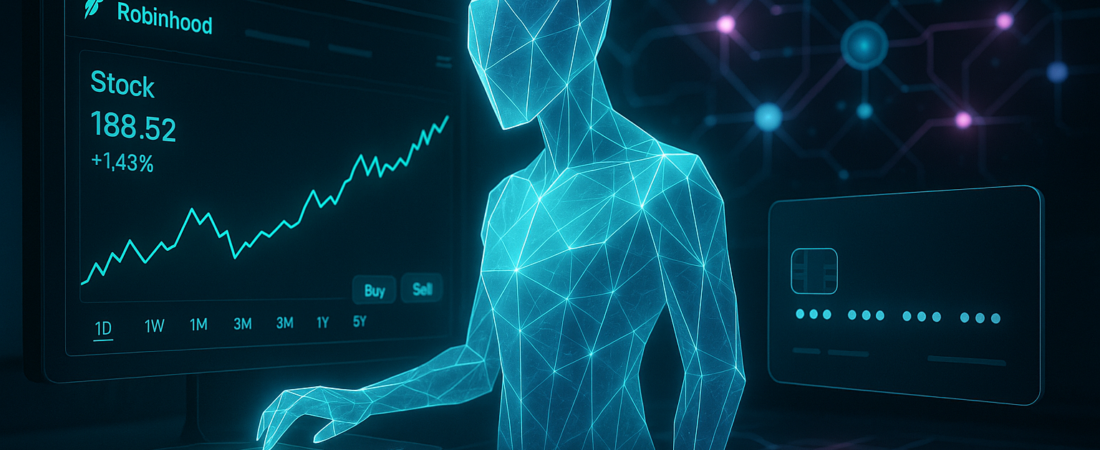
Robinhood just crossed the Rubicon of retail finance. On May 27, 2026, the company moved beyond simply showing you charts to giving an AI agent the keys to your bank account. With the launch of Agentic Trading and the Agentic Credit Card, 27 million users can now let autonomous software execute trades and book travel entirely on their behalf. We aren’t just talking about automated recurring investments anymore; we are talking about software that thinks, decides, and spends for you.
| Attribute | Details |
| :— | :— |
| Difficulty | Intermediate (Requires API understanding) |
| Time Required | 10–15 Minutes for setup |
| Tools Needed | Robinhood Gold, MCP-compatible AI (Claude/ChatGPT) |
The Why: Moving From Advice to Action
For the last three years, AI has been a world-class talker. You could ask ChatGPT to analyze a 10-K filing or suggest a “Dogs of the Dow” strategy, but the “last mile”—the actual clicking of the ‘Buy’ button—remained a human burden.
Robinhood’s agentic shift solves the latency of human hesitation. In a market where 24/7 news cycles and instant volatility are the norms, the delay between “I should rebalance” and actually doing it costs money. By leveraging the Model Context Protocol (MCP), Robinhood is turning AI from a research assistant into a fiduciary executioner. You should care because this isn’t just a new feature; it’s the beginning of the “Invisible Finance” era, where your net worth manages itself while you sleep.
Step-by-Step: Setting Up Your Autonomous Agent
Setting this up requires more than just toggling a switch. You need to architect a “sandbox” for your AI to play in so it doesn’t accidentally liquidate your retirement fund.
- Partition your capital. Open a dedicated Agentic Trading account within the Robinhood app. This acts as a firewall. The AI can only access what you manually transfer into this specific pot.
- Connect via MCP. Use an MCP-compatible AI interface (like Claude 4 or specialized GPT-5 agents) to link to Robinhood’s servers. This standard allows the AI to “see” your balance and “push” trade orders without needing your password.
- Define the boundaries. Input your “Standing Orders.” Don’t just say “make money.” Use specific parameters: “Maintain a 60/40 split between Big Tech and Treasury bonds, rebalancing if any position drifts by more than 5%.”
- Activate the Virtual Card. For the shopping agent, generate a disposable virtual credit card linked to your Gold Card. Set a hard spending limit (e.g., $500) and a “manual approval” toggle for anything over $50.
- Monitor the Feed. Open the real-time activity stream. Every trade or purchase generates a push notification. You aren’t watching the market anymore; you’re managing the manager.
💡 Pro-Tip: Use the “Trade Preview” mode for the first 30 days. It forces the AI to send you a ‘Yes/No’ notification before it hits the exchange. Once you’re confident the agent understands your risk tolerance, flip the switch to full autonomy. This evolution reflects the broader GPT-5.5 autonomous agents trend, where AI moves from simple chat to high-level digital employment.
The Buyer’s Perspective: Innovation vs. Accountability
Robinhood isn’t the first to the party—competitors like Liquid recently launched “Co-Invest,” which allows direct trading within a chat prompt. However, Robinhood’s advantage is its ecosystem. By integrating the Agentic Credit Card, they’ve created a closed loop: your AI can earn 3% cash back on a flight it found and booked for you, then immediately invest that cash back into the market via the trading agent. This type of agentic commerce is rapidly becoming the new standard for how brands and users interact in a post-search world.
The downside? The liability shift. Robinhood is very clear: if your AI hallucinations result in financial loss, that is the user’s responsibility. Unlike traditional robo-advisors (Wealthfront/Betterment) which operate on rigid, audited algorithms, agentic AI is unpredictable. You are trading the safety of a “vetted” algorithm for the flexibility of a “thinking” one. For investors looking for traditional stock opportunities rather than bot-led trading, reviewing the top AI stock to buy might still be the safer route.
FAQ
Does the AI agent have access to my entire Robinhood portfolio?
No. The system uses a “firewall” model. You must create a separate Agentic Trading account and a disposable virtual credit card. The AI can only spend or trade what you specifically move into those buckets.
What happens if the AI makes a mistake?
Legally, you are the pilot. Robinhood’s terms of service specify that monitoring the account is the user’s responsibility. There are currently no “fiduciary protections” for AI-led retail mistakes. This highlights the growing AI agent security concerns as autonomous tools take on more real-world responsibility.
Can I use this for Crypto or Options?
Currently, the beta is limited to equities (stocks and ETFs). Robinhood has signaled that the rollout for crypto, options, and prediction markets is slated for late 2026.
Ethical Note: While AI can optimize a portfolio, it cannot account for the emotional risk or the “black swan” systemic failures that defy historical data.