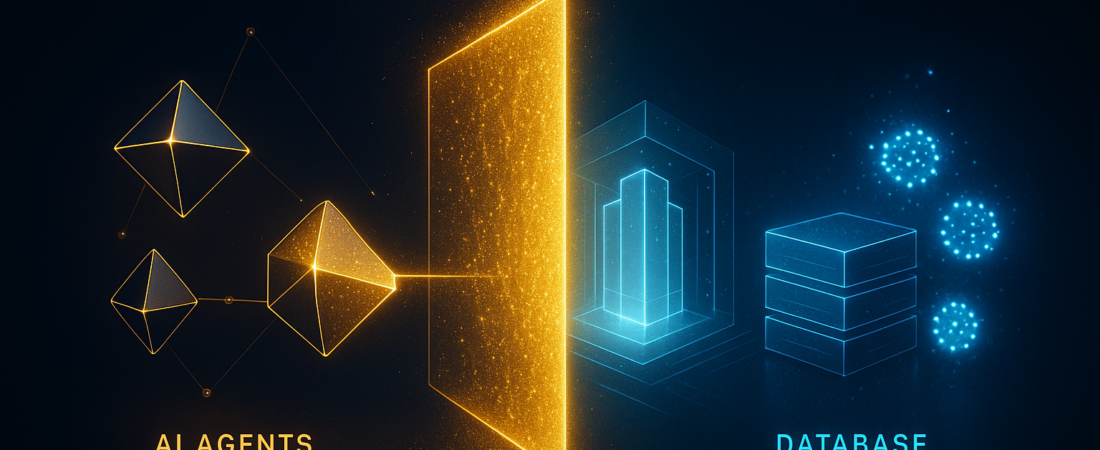
The nightmare scenario for any CISO in 2026 isn’t just a data breach; it’s an autonomous AI agent, acting on behalf of the company, hallucinating a command that deletes a production database or leaks sensitive payroll data to a public Slack channel. For years, we’ve relied on “post-mortem” security—analyzing what went wrong after the damage was done. Airia is trying to end that era.
By shifting security runbooks from a reactive “cleanup” role to an “inline” interceptor, Airia is essentially placing a high-speed logic gate between an agent’s intent and its action. It’s the difference between a smoke detector that calls the fire department and a smart sprinkler system that stops the match from ever being lit. This shift reflects a broader industry movement where securing autonomous AI agents has become the top priority for enterprise stability.
| Attribute | Details |
| :— | :— |
| Difficulty | Intermediate (Requires IAM & Policy knowledge) |
| Time Required | 15–20 minutes to configure a basic Runbook |
| Tools Needed | Airia Enterprise Platform, Agent Tool Definitions (JSON) |
The Why: The Reactive Gap is a Liability
In the current enterprise AI gold rush, agents are being granted “tool-calling” capabilities—the power to browse the web, query databases, or execute code. Traditional security (SOAR) playbooks trigger after a violation occurs. In the world of autonomous agents, “after” is too late. If an agent executes a fraudulent wire transfer, knowing about it two minutes later doesn’t get the money back.
Airia’s new Multi-Step Inline Runbooks solve the “Reactive Gap.” By forcing an agent to pause while a customer-defined sequence of checks is completed, organizations can finally move past simple binary (Allow/Block) permissions. This is about nuanced AI governance: “You can access this data, but only if the system first verifies the user’s current clearance level and checks for recent suspicious activity.”
How to Implement Multi-Step Agent Constraints
Implementing these constraints requires shifting your mindset from static permissions to dynamic workflows. Here is how to set up an inline security intercept.
- Identify High-Risk Tool Calls: Navigate to your Airia Agent Inventory. Flag tool calls that involve PII (Personally Identifiable Information), financial transactions, or system-level write access.
- Define the Trigger Logic: Open the “Agent Constraints” engine. Instead of selecting “Block,” choose “Trigger Runbook.” Define the conditions—for example, trigger if a tool call includes an “amount” parameter over $5,000.
- Build the Multi-Step Sequence: Construct your runbook logic. A typical sequence might include:
- Step A: Verify the agent’s session token against the internal identity provider.
- Step B: Scan the tool input for prompt injection or hidden malicious payloads.
- Step C: Query the system state to ensure the target database isn’t in a “Read-Only” maintenance mode.
- Set the Verdict Actions: Define the outcome for each branch of your logic. If the runbook returns “Safe,” the call resumes automatically. If “Risky,” the call is blocked, and an alert is sent to the SOC.
- Deploy and Audit: Once live, use the Airia Governance Dashboard to monitor how many calls are intercepted. This provides the audit trail that regulators now demand for autonomous systems. Organizations are increasingly realizing that agentic AI security requires these types of robust, programmatic guardrails to be effective.
💡 Pro-Tip: Don’t build one massive runbook for everything. Use “If-Then-Else” logic to branch your security checks. For low-stakes calls, use a single-step automated check to minimize latency. Save the multi-step, deep-packet inspections for tools that touch your “crown jewel” data to keep your agent’s response time snappy.
The Buyer’s Perspective: Governance vs. Performance
Airia’s move to inline runbooks puts them ahead of generic LLM firewalls. While competitors like DataRobot or IBM OpenScale focus heavily on model performance and bias, Airia is doubling down on the operational layer of AI.
The value proposition here is simple: speed. By automating the review process at the moment of execution, you eliminate the human bottleneck without sacrificing safety. However, the trade-off is latency. Every step in a runbook adds milliseconds to an agent’s response time. Enterprises will need to balance the rigor of their security checks against the “snappiness” users expect from AI interactions. This is a critical component of a modern enterprise AI strategy where execution must meet safety. Compared to the alternative—hiring a fleet of human “AI minders”—Airia’s automated gatekeeper is both more scalable and significantly cheaper in the long run.
FAQ
Does this slow down the AI’s response time?
Yes, but minimally. Because the runbooks are executed on Airia’s optimized infrastructure, the delay is usually measured in milliseconds—often less time than it takes for the LLM itself to generate a response.
Can these runbooks be bypassed by prompt injection?
The runbook acts as a “wrapper” outside the LLM’s environment. Even if an agent is “convinced” by a user to do something malicious, the Agent Constraint engine sees the tool call itself, not just the text, making it much harder to circumvent. This acts similarly to an agentic kill switch, providing a final layer of protection before an action is finalized.
Do I need to write code to create these sequences?
Airia uses a low-code visual builder for most runbooks, though technical teams can use JSON and API calls for complex integrations with legacy security tools.
Ethical Note/Limitation: While inline runbooks prevent unauthorized actions, they cannot fix the underlying logic flaws of a model; they simply act as a safety net for the model’s output.