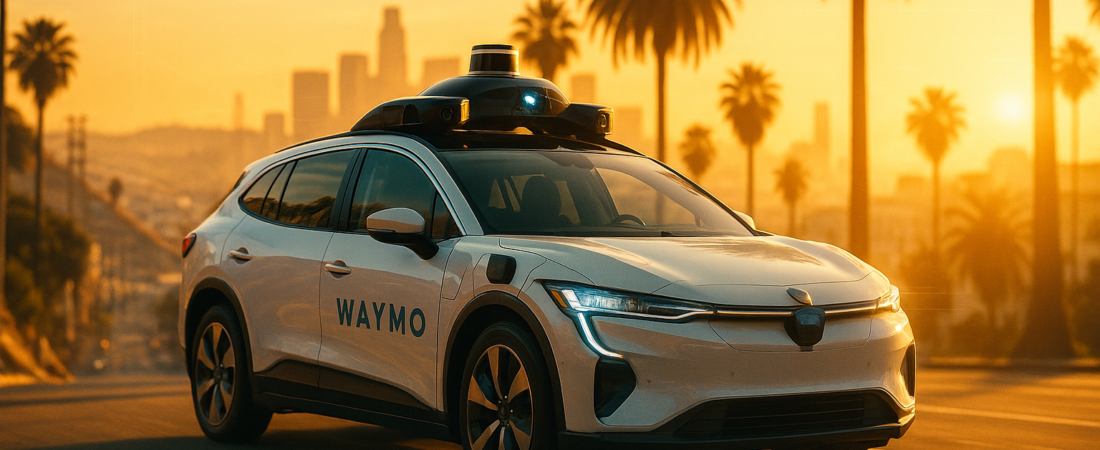
The era of the “safety driver” is officially receding into the rearview mirror. In a massive regulatory win for Alphabet, the California Public Utilities Commission (CPUC) has cleared Waymo to expand its commercial robotaxi operations across vast swaths of the San Francisco Bay Area and Los Angeles. This isn’t just another pilot program; it is the definitive scaling of autonomous transit in two of the most complex driving environments in the world.
| Attribute | Details |
| :— | :— |
| Market Impact | High — Signals a shift from experimental to commercial infrastructure |
| Difficulty | Intermediate (for users navigating new service zones/apps) |
| Regions Added | SF Peninsula, Los Angeles Basin, and select metro areas |
| Tools Needed | Waymo One App, Google Account |
The Why: Why This Expansion Changes the Game
For years, autonomous vehicles (AVs) were a novelty—white SUVs bristling with spinning sensors, confined to geofenced pockets of Phoenix or specific San Francisco neighborhoods. The CPUC’s approval changes the stakes. By allowing Waymo to charge for rides across the San Francisco Peninsula and Los Angeles, the state is betting that AI can handle high-speed boulevards, dense freeway interchanges, and the unpredictable chaos of Southern California traffic better than humans can.
For the professional commuter or the tech-forward traveler, this solves the “Uber fatigue” problem: no awkward small talk, no unpredictable driving styles, and a consistent, mobile-office environment. But more importantly, it marks the first time an AV company has been given the runway to compete directly with ride-hailing giants on a regional scale. In fact, as autonomous AI agents begin to handle more of our physical world logistics, the need for robust safety protocols becomes paramount.
How to Access the Future of Transit
If you are living in or visiting these new zones, you don’t have to wait for a special invitation anymore. Here is how to get on the road.
- Download the Waymo One App: Available on iOS and Android. Skip the standard Google Maps interface for now; the dedicated app provides real-time sensor visualization that Maps lacks.
- Verify Your Zone: Check the updated service map. The new approval covers the San Francisco Peninsula (south of the city) and a massive chunk of Los Angeles, including Santa Monica, Century City, and West Hollywood.
- Configure Your Preferences: Use the app to set your “Car ID” (a customizable LED color on the dashboard) so you can spot your vehicle in a crowd.
- Audit the Route: Unlike human drivers who might take a “shortcut” through an alley, Waymo sticks to mapped, validated roads. Review the projected path to ensure it aligns with your timing needs.
- Signal the Start: Once inside, you must tap “Start Ride” on the passenger screen. The car will not move until it detects all doors are closed and passengers are ready.
💡 Pro-Tip: If you’re using Waymo for business calls, the vehicles offer built-in Google Assistant integration. You can ask the car to play specific white noise or music to mask city sounds, turning the cabin into a surprisingly effective mobile meeting room. Much like how an Uber AI assistant helps streamline your chores, these integrated vehicle systems are designed to maximize passenger productivity.
The “Buyer’s Perspective”: Waymo vs. The Competition
While Tesla’s “Full Self-Driving” (FSD) grabs the most headlines, Waymo is winning the war of attrition. Tesla relies on a vision-only system (cameras), whereas Waymo uses a “sensor fusion” approach—combining LiDAR, radar, and cameras.
From a user perspective, the difference is stark. Waymo’s hardware suite allows the vehicle to “see” in pitch darkness and through heavy fog—conditions that often baffle camera-only systems. However, the trade-off is geographic flexibility. You can take a Tesla anywhere, but you can only take a Waymo where it has been meticulously pre-mapped. For the resident of Los Angeles, Waymo offers a level of refined, jerk-free braking and lane centering that currently outclasses the tech used by competitors like Cruise or Zoox. As the industry evolves, many experts suggest that we are seeing a broader shift to agentic computing where the machine takes on the full responsibility of the task at hand.
FAQ
Is it actually safer than a human driver?
Data submitted to regulators suggests Waymo vehicles have significantly fewer injury-causing crashes per million miles compared to human drivers in the same zip codes, primarily because the AI doesn’t get distracted, tired, or angry.
What happens if the car gets stuck or encounters a road closure?
Waymo operates a remote assistance center. If the AI is confused by a downed power line or an unusual construction flagger, a human technician can “look” through the car’s cameras and provide a safe path forward, though they do not “drive” the car via joystick.
Can I take a Waymo to the airport (SFO or LAX)?
Expansion is happening in stages. While the CPUC approval covers the regions, specific airport terminal access often requires separate agreements with airport authorities. Check the app for specific drop-off “islands.” You can even use Google Maps Gemini features to help plan your transition from the robotaxi to your terminal.
Ethical Note/Limitation: While highly advanced, Waymo’s AI still struggles with “unprotected” scenarios that haven’t been pre-mapped, meaning it cannot yet function as a true go-anywhere replacement for a personal vehicle.