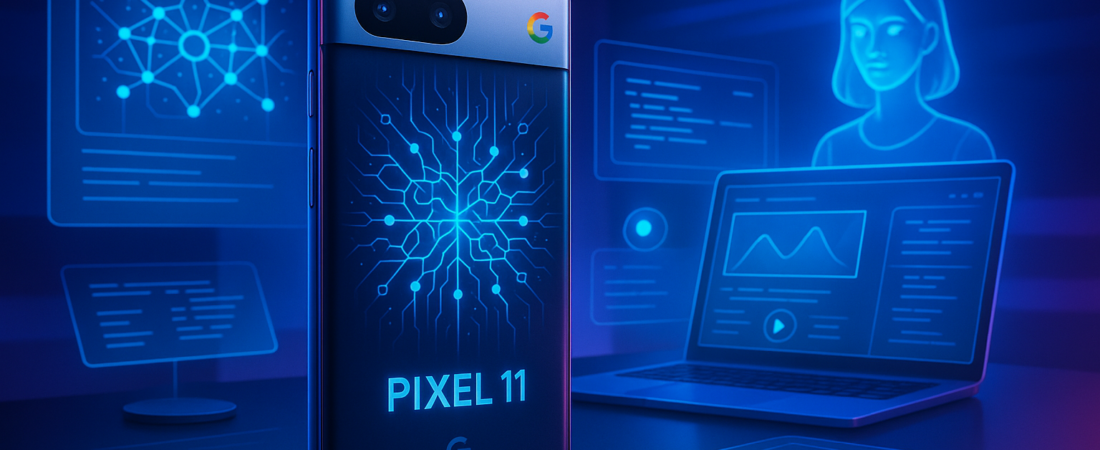
Google just crossed the Rubicon. With the Gemini app hitting one billion monthly users and the launch of the Pixel 11, the company is no longer just selling AI as a futuristic promise; they’re turning it into a high-speed utility. The August 2026 update cycle suggests a shift toward “disposable” intelligence—highly capable, low-cost models like Gemini 3.7 Flash that make building complex AI agents cheaper than a cup of coffee.
| Attribute | Details |
| :— | :— |
| Difficulty | Intermediate (Developer & Consumer focus) |
| Time Required | 10–15 minutes for setup |
| Tools Needed | Google Flow, Pixel 11, Gemini 3.7 Flash API |
The Why: Why You Should Care About the “Flash” Pivot
The “intelligence per dollar” ratio just shifted. By launching Gemini 3.7 Flash only three weeks after its predecessor, Google is signaling that model lifecycles are now measured in days, not years.
For the average professional, this means the friction between having an idea and deploying a functional AI agent has vanished. Whether you are a student getting a free year of AI tools or a developer building autonomous coding agents, the cost of failure is now near zero. We are moving away from “chatting” with bots and toward delegating entire workflows—like real-time 4K video upscaling or global climate modeling—to specialized, lightning-fast models. This trend is part of a larger Gemini February updates cycle that has seen Google aggressively iterate on its reasoning and speed capabilities.
Step-by-Step: Deploying Gemini Omni 1.1 Flash for Video
The standout release this month is Omni 1.1 Flash. It’s designed for creators who need granular control over video generation rather than just “praying for a good prompt.”
- Access the Environment: Open Google Flow or Google AI Studio. If you are an enterprise user, navigate to the Gemini Enterprise Agent Platform.
- Upload Your Anchor Frames: Unlike previous models, Omni 1.1 allows for first-and-last-frame interpolation. Upload the starting image and the desired ending image of your sequence.
- Define Creative Constraints: Use the new “Scene Extension” toggle to lengthen existing footage without losing character consistency.
- Execute 4K Upscaling: Select the “Crisp 4K” output setting. The Flash architecture handles the heavy lifting, rendering high-resolution frames in a fraction of the time required by the older 1.0 Ultra models. This level of control is similar to recent Google Flow update features that transform simple prompts into professional workstations.
- Review and Iterate: Use the “Prototyping” mode to generate low-res thumbnails instantly before committing tokens to the final 4K render.
💡 Pro-Tip: When using Gemini 3.7 Flash for coding agents, set your temperature to 0.3. The model is tuned for speed, but at higher temperatures, it can get “flighty” with syntax. Keeping it low ensures you reap the 50% cost savings without sacrificing code logic.
The “Buyer’s Perspective”: Hardware vs. Software
The Pixel 11 series, powered by the Tensor G6, is effectively a specialized Gemini terminal. While Apple focuses on private cloud compute, Google is doubling down on “Gemini Nano”—running the model locally on your device for things like Google Personal Intelligence and hands-free inbox management.
However, the real winner isn’t the hardware; it’s the Gemini 3.5 Transcribe model. While competitors like OpenAI and specialized firms like Otter.ai offer transcription, Google’s direct-to-context audio processing is frighteningly accurate in noisy environments. It doesn’t just turn speech to text; it understands the “jargon” of specific industries out of the box. If you’re in a high-noise field (construction, live events, medical), this is the current gold standard.
FAQ: What You Need to Know
Is Gemini 3.7 Flash actually better than 3.6?
Yes. While the name suggests a minor iteration, the model shows a marked improvement in software engineering tasks and long-context reasoning, all while costing 50% less per million tokens. This follows the high-speed deployment pattern seen with Gemini 3.5 Flash earlier this year.
Can I run these models offline?
Yes, via the Gemma open-source framework. Google reported that Gemma has hit one billion downloads, proving it’s the go-to for developers building “edge” AI that works in remote locations (or even space).
How do I get the free student year?
Eligible college students can verify their status through the Google AI student hub to unlock a full year of the Google AI plan, which includes Gemini Advanced and integration into Google Workspace.
Ethical Note/Limitation: While Gemini 3.7 Flash excels at speed, it still lacks the deep, “slow-thinking” reasoning capabilities required for high-stakes legal or medical diagnostic conclusions without human oversight. For those heavy-lifting tasks, Google still points users toward Gemini 3 Deep Think, which is designed specifically for complex logic and scientific research.