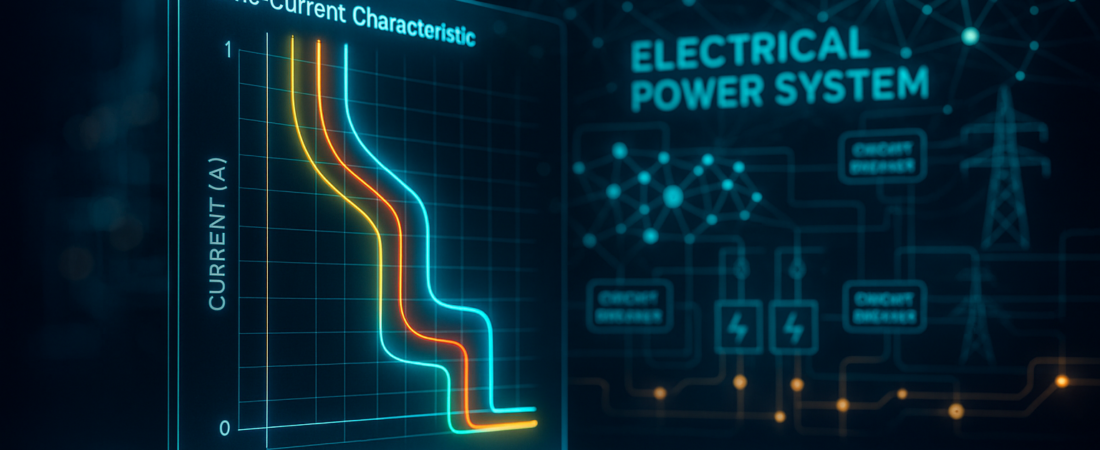
Electrical engineering is finally losing its “manual labor” stigma. For decades, protection coordination—the high-stakes task of ensuring circuit breakers trip in the right order—has been a grueling exercise in curve-plotting and trial-and-error. One mistake and you risk a nuisance trip that shuts down a data center or, worse, an arc flash that destroys equipment.
ELEK just changed the math. By integrating AI Protection Coordination into their Cable Pro Web suite, the company is moving beyond simple cable sizing into the realm of automated system intelligence. This isn’t just a digital version of a paper chart; it’s a predictive engine that understands the physics of your grid.
| Attribute | Details |
| :— | :— |
| Difficulty | Intermediate (Requires power systems knowledge) |
| Time Required | 10–15 Minutes for complex layouts |
| Tools Needed | ELEK Cable Pro Web AI, Electrical SLD |
The Why: Why Automated Coordination Matters Now
The modern grid is no longer a one-way street. With the influx of solar PV, EV charging hubs, and battery storage, fault currents are becoming harder to predict. Traditional coordination methods struggle to keep up with these variables.
Engineers usually spend hours, if not days, manually adjusting Time-Current Curves (TCC) to ensure selectivity. If a fault occurs at a sub-panel, you don’t want the main switchboard to trip and kill power to the entire building. ELEK’s AI solves this by analyzing thousands of device combinations instantly. It eliminates the “human fatigue” factor that leads to overlapping curves and system vulnerabilities. You care because this tool turns a three-day engineering task into a coffee-break activity. While this automation is revolutionary, it follows a broader trend where specialized AI agents are moving beyond simple chatbots to modernize complex professional workflows.
Step-by-Step: Implementing AI Protection Coordination
If you’re ready to move away from manual plotting, here is how you leverage the ELEK engine to secure your system.
- Map Your Single Line Diagram (SLD): Upload or build your system architecture within Cable Pro Web. Ensure your transformers, motors, and cables are accurately defined, as the AI uses these impedances to calculate fault levels.
- Initialize the Protection Database: Select your protective devices from the library. ELEK’s database includes real-world data from major manufacturers like Schneider, ABB, and Siemens.
- Activate the AI Optimizer: Instead of dragging curve handles manually, trigger the “Coordinate” function. The AI will scan the path from the utility source to the smallest branch circuit.
- Review the Selectivity Report: The system will highlight any “miscoordination” zones—areas where curves overlap. The AI suggests specific setting adjustments (Long Time, Short Time, Instantaneous) to clear these overlaps. This type of advanced technical problem-solving is becoming the new benchmark for high-reasoning AI models.
- Validate and Export: Once the AI clears the selectivity requirements, generate your TCC graphs. The software produces professional-grade reports ready for submission to local authorities or clients.
💡 Pro-Tip: Use the “Sensitivity Analysis” toggle. Most engineers only coordinate for maximum fault currents, but the real danger often lies in minimum fault currents where a breaker might take too long to trip. The AI can optimize for both ends of the spectrum simultaneously, a process that is nearly impossible to do manually without significant errors.
The Buyer’s Perspective: Is It Worth the Upgrade?
ELEK is positioning itself as the “Goldilocks” of electrical software. On one side, you have legacy giants like ETAP or SKM, which are incredibly powerful but carry a steep learning curve and a price tag that scares off mid-sized firms. On the other, you have basic calculators that lack the sophistication for complex coordination.
The value proposition here is speed-to-compliance. By moving the coordination engine to the cloud (Web AI), ELEK allows for collaborative design without the need for expensive local hardware or license dongles. This transition mirrors the shift toward an AI-native platform that eliminates manual middleware and fragmented tech stacks. While it may not yet replace the specialized niche of high-voltage utility relaying, for commercial and industrial contractors, it offers a significantly better ROI than manual methods. The interface feels like 2024, whereas many competitors still feel stuck in 2005.
FAQ
Does this tool replace the need for a Professional Engineer (PE)?
No. While the AI suggests the most efficient settings, a qualified engineer must still review and “stamp” the design. The AI is your co-pilot, not the captain.
Can it handle multi-source systems like Microgrids?
Yes. The engine is designed to account for diverse energy sources, making it particularly useful for projects involving on-site renewables where fault current contributions vary.
What happens if my specific breaker isn’t in the library?
ELEK allows for custom device entry, though the AI works most effectively with its verified manufacturer library to ensure the trip curves are 100% accurate to real-world performance. In the same way that engineering requires precision, new reasoning engines are being developed to provide mathematically verified solutions for complex infrastructure.
Ethical Note/Limitation: Currently, this AI cannot account for physical installation errors or “out-of-box” equipment defects; it assumes all hardware performs exactly to its published manufacturer specifications.