Church Handbook Offers Enduring Guidance on Artificial Intelligence
Estimated reading time: 7 minutes
Key Takeaways
- The Church’s General Handbook now includes guidance on the use of AI for its members.
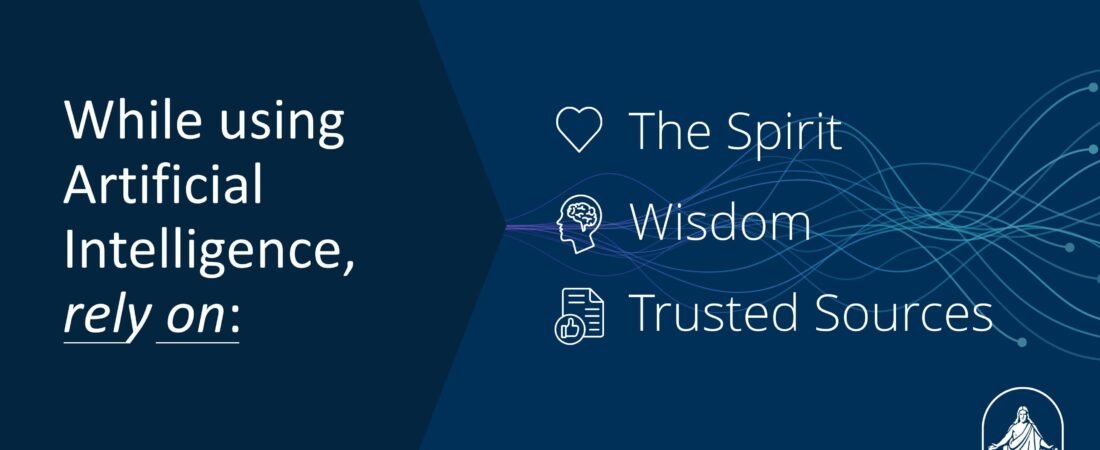
- These guidelines emphasize using AI to enhance but not replace spiritual activities.
- AI should not be used for sensitive decisions like medical or financial advice.
- Confidential data should not be entered into AI unless managed by the Church.
Table of contents
In an era where artificial intelligence (AI) is revolutionizing almost every aspect of our lives, The Church of Jesus Christ of Latter-day Saints has taken a significant step in providing guidance on how this powerful technology should be used by its members. On December 16, 2025, the Church updated its General Handbook, unveiling a new section that offers principled guidance on the appropriate use of AI in Church assignments and personal spiritual activities. This update is not just a reflection of the Church’s proactive approach to contemporary issues but also a testament to its commitment to maintaining its core values amidst technological advances. Let’s dive deeper into this captivating development that is stirring both curiosity and excitement within and beyond the Church community.
A Groundbreaking Update in the General Handbook
The inclusion of AI guidance in the Church’s General Handbook is a noteworthy event. The new section, identified as 38.8.47, lays down four key principles for its members when using AI. These principles are designed to ensure that while embracing technology, members remain true to the Church’s integrity, standards, and teachings. This reflects the Church’s balanced view that appreciates the benefits of AI, while also acknowledging the importance of human spiritual effort. Discover more.
Core Principles and Statements
One of the handbook’s primary tenets is the encouragement to utilize AI in “positive, helpful, and uplifting ways”. This means AI should bolster – not overshadow – the Church’s mission to uphold its teachings and standards. Whether it’s helping conduct research or aiding in translation, AI is seen as a tool that complements human efforts, rather than replacing them entirely. This aligns with the Church’s belief that individual work and divine inspiration cannot be supplanted by AI. Learn more.
The Church further declares that AI must not be used to replace the essential individual work required for divinely inspired talks, lessons, prayers, or blessings. While AI can unquestionably assist in areas like editing and research, the human element of spirituality remains irreplaceable. This speaks volumes about the Church’s emphasis on maintaining meaningful relationships with God and others, guarding against the temptation of over-reliance on technology. Read full story.
Another critical point made in the handbook is the directive for Church leaders to refrain from using AI for medical, financial, legal, or other sensitive advice. Instead, these matters should be entrusted to competent professionals along with spiritual guidance. This approach underscores the welfare of the members and the sanctity of personal decisions which should not be left to artificial computations. See more details.
Lastly, the handbook strongly advises against entering sensitive information—that may include Church records, personal member data, or confidential communications—into AI tools unless provided or managed by the Church. Such a move highlights the importance of data privacy and ethical considerations in the digital realm. Explore further details.
AI: A Friend, Not a Substitute
Beyond the foundational principles, the document also remarked that AI “cannot replace the gift of divine inspiration or the individual work required to receive it”, making it clear that AI cannot substitute for spiritual experiences and growth. It emphasizes that interactions with AI are no match for the richness of real-world relationships with God and among human beings. Read all details.
Further clarifying, the Church explained that while AI has the potential to “enhance learning, facilitate communication, and foster innovation”, it should never replace personal spiritual endeavors and genuine human connections. This philosophical stance offers a balanced and forward-thinking perspective, encouraging the use of AI for productivity without losing sight of spiritual fidelity. Know more.
A Broader Context of Evolution
This remarkable update unfolds alongside other new modifications in the handbook covering Bible translations and temple clothing among other moral issues. Published in the official Newsroom, these updates reflect a holistic approach to evolving cultural and technological landscapes, keeping faith synchronized with present-day demands and challenges. Gain deeper insights.
Moreover, a dedicated Church page elucidates principles for Church use of AI, denoting that right application helps in fulfilling divine objectives more effectively and efficiently, addressing ethical and moral deliberations. This again resonates with the Church’s enduring vision of coupling technology with spirituality. Find out more.
It’s indeed fascinating how this move of integrating AI guidance within the Church handbook is sparking riveting discussions around the world. It brings forth an array of questions: Could this become a model for other religious organizations? Will it enhance spiritual connections in this digital age? How might this impact broader societal norms on technology use? These are thought-provoking areas worth exploring as we continue to straddle the complex intersection between spirituality and technology.
In conclusion, the Church has laid out an enlightening vision for the use of artificial intelligence that combines prudence and optimism. By stepping into this frontier with a clear directive, the Church has empowered its members to harness AI’s capabilities while remaining firmly grounded in faith. The thrilling journey of AI in the spiritual realm beckons with promises and promises yet to be fulfilled, as we collectively navigate these uncharted waters.