The era of “one tool for one task” in generative AI is dying. While most of us are still bouncing between ChatGPT for copy, Midjourney for images, and Runway for video, a new heavyweight has emerged to collapse that entire workflow into a single prompt. Flik, a generative AI agent launching today with a 50,000-person waitlist, isn’t just another feature—it’s a full-stack production house.
Flik is claiming it can do in hours what currently takes a 15-person agency three months. We’re talking about 20-minute TV episodes with lip-synced characters, 500-shot product catalogs, and 12-module training programs generated from a single secure workspace. And unlike the “Wild West” models of 2023, Flik is obsessed with the one thing that keeps corporate lawyers awake at night: safety and IP protection.
| Attribute | Details |
| :— | :— |
| Difficulty | Intermediate (Requires prompt engineering skills) |
| Time Required | 10 minutes to setup; Hours for full campaigns |
| Tools Needed | Flik Platform (integrates Claude, Gemini, Eleven Labs) |
| Best For | Marketing teams, creators, and enterprise production |
The Why: The End of “Fragmented Creation”
The current AI landscape is a mess of browser tabs. You generate a script in one window, hope the voiceover matches in another, and then pray the video generator doesn’t hallucinate a third arm. This fragmentation creates “creative friction,” where the time spent managing tools offsets the time saved by the AI.
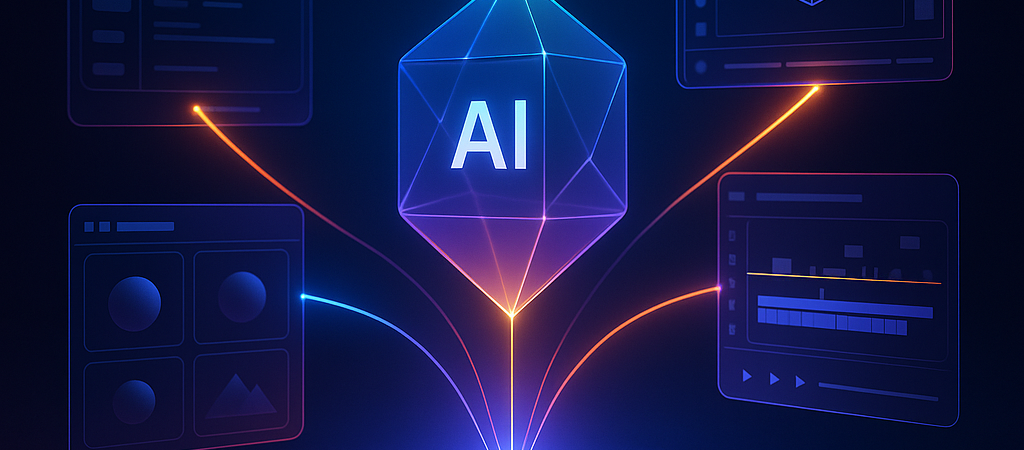
Flik solves this by acting as an orchestrator. It sits on top of best-in-class models like Claude, Gemini, and Seedance, syncing them so the “brain” knows exactly what the “eyes” and “voice” are doing. It targets the enterprise pain point of brand safety—automatically blocking likeness misuse and copyrighted material—making AI-generated content actually usable for a Fortune 500 company without a lawsuit.
Step-by-Step: How to Build a Full-Scale Campaign in Flik
Flik moves beyond the simple chatbot interface to a multi-agent system. Here is how you deploy it:
- Define Your Brand Identity: Upload your brand guidelines, logo files, and specific product images. Flik’s “IP Guard” scans these to ensure it stays within your stylistic boundaries.
- Prompt the Master Agent: Instead of asking for a social post, ask for a “Multi-Channel Launch.” For example: “Generate a 30-day campaign for a new hiking boot, including 15 vertical videos with voiceover, 50 studio-quality product shots, and a 10-slide investor deck.”
- Refine the Orchestration: Review the generated assets in the unified workspace. If you change a line of dialogue in the script, Flik automatically updates the lip-sync in the corresponding video and the text in the social captions.
- Execute Multi-Asset Export: Once the “Production Pipeline” is satisfied, export everything at once. Flik handles the aspect ratio conversions (16:9 for YouTube, 9:16 for TikTok, 1:1 for Instagram) automatically. This multi-AI orchestration ensures that all outputs remain synchronized across different formats.
💡 Pro-Tip: Use Flik’s “Consistent Character” toggle. By naming a generated persona, you can “lock” their facial identity across different modules—from a training video to an Instagram ad—ensuring your brand has a consistent face without hiring a human spokesperson.
The Buyer’s Perspective: Is It a Midjourney Killer?
Flik isn’t trying to out-paint Midjourney or out-write Claude; it is trying to out-manage them. Its competitive advantage lies in orchestration and safety.
While startups like HeyGen or Sora focus on high-fidelity video, they often lack the “connective tissue” to build a 20-minute episode or a 500-image catalog. Flik’s reliance on multiple models (Eleven Labs for audio, various LLMs for text) makes it more versatile but also more complex. The real winner here is the “Likeness Protection” system. In a world where deepfakes are a legal minefield, Flik’s proactive blocking of real human faces makes it the only viable choice for risk-averse legal departments, especially as Disney and Universal sue Midjourney over copyright concerns regarding training data and intellectual property.
However, the “waitlist” status suggests that scaling this much compute is expensive. Expect a premium price tag compared to single-purpose tools.
FAQ
Does Flik train its models on my data?
No. Flik is designed as an enterprise-grade environment. Outputs and project data are never used to train the underlying AI models, ensuring your trade secrets stay secret.
Can I use specific celebrities in my videos?
Absolutely not. The platform has a hard-coded rejection system for real human faces and prompts referencing specific individuals to prevent impersonation and IP theft.
What models does Flik actually use?
It is model-agnostic. It currently leverages Claude for logic and text, Gemini for scale, Eleven Labs for high-fidelity audio, and proprietary systems for video synthesis and safety filtering.
Ethical Note/Limitation: While Flik can generate high volumes of content, it cannot replace a creative director’s taste; it produces what you ask for, meaning poor prompts will still result in high-speed, high-volume mediocrity. To ensure your brand remains distinct, focus on AI Visibility to understand how your generated assets are being indexed and perceived by AI-driven search engines.