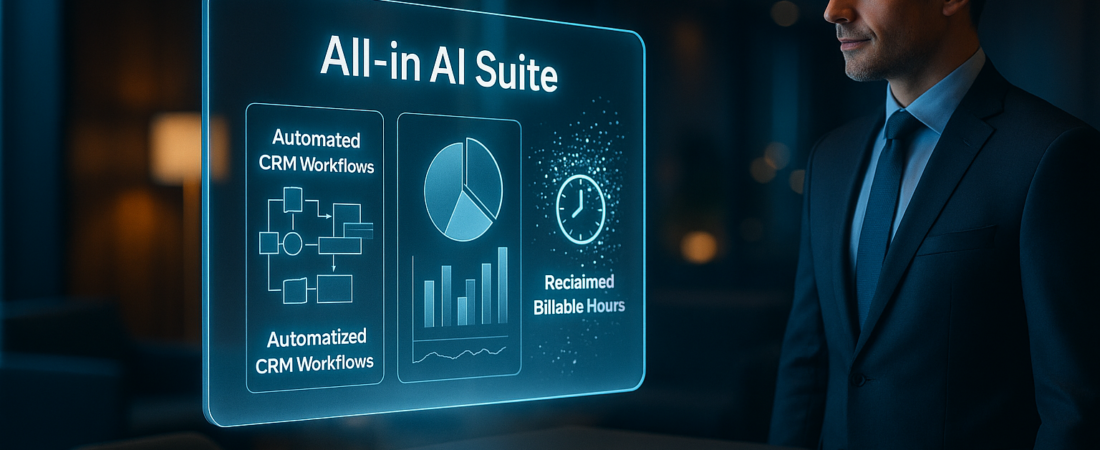
The average wealth manager spends nearly 70% of their week on tasks that have nothing to do with picking stocks or planning for a client’s retirement. They are buried in meeting notes, compliance paperwork, and fragmented CRM entries. Advyzon’s new “All-in AI” suite isn’t just another software update; it is an attempt to collapse that administrative burden into a single, automated workflow.
| Attribute | Details |
| :— | :— |
| Difficulty | Intermediate (Requires platform integration) |
| Time Required | 15–30 minutes for initial setup |
| Tools Needed | Advyzon Platform, Client CRM Data, AI suite access |
The Why: The Death of “App Fatigue”
For years, the wealthtech industry has sold the dream of the “integrated stack.” In reality, advisors end up with a Frankenstein’s monster of six different apps that barely talk to one another. You record a meeting in Zoom, summarize it in a third-party AI notebook, manually copy those notes into a CRM, then jump into a separate portal to adjust a portfolio.
Advyzon is betting that advisors are tired of the “integration tax.” By weaving AI directly into the fabric of its unified platform—which already handles CRM, portfolio management, and reporting—the firm is removing the friction of moving data between silos. This isn’t about novelty; it’s about reclaiming the billable hour. Many firms are realizing that the death of the “stitched together” tech stack is necessary to achieve true operational efficiency.
Step-by-Step Instructions: Implementing the All-in AI Workflow
To get the most out of this suite, you shouldn’t just “turn it on.” You need to bake it into your client service model.
- Sync Your Data Reservoirs: Ensure your existing client profiles in the Advyzon CRM are updated. The AI’s output—whether it’s a personalized email or a financial summary—is only as sharp as the historical data it can reference.
- Automate the Post-Meeting Hangover: Use the integrated recording and transcription tools during client reviews. Instead of spending 20 minutes typing notes, many advisors are choosing to use Zoom AI Companion to automate meeting summaries and let the AI generate the summary directly within the client’s timeline.
- Audit the Drafts: Use the “All-in” tool to draft portfolio commentary or quarterly newsletters. Start with a specific prompt regarding your firm’s current market outlook to ensure the AI doesn’t produce generic “market speak.”
- Execute Administrative Workflows: Set the AI to identify missing data points in client files. Use the tool to flag accounts that need RMDs (Required Minimum Distributions) or those that have drifted away from their target asset allocation.
💡 Pro-Tip: Don’t let the AI write your entire client email. Use the tool to generate “Bullet Summaries” of long-form reports. Clients are more likely to engage with three high-impact bullet points than a six-paragraph explanation of why their international small-cap fund is lagging.
The Buyer’s Perspective: Unified vs. Best-of-Breed
The wealthtech market is currently split into two camps. On one side, you have “Best-of-Breed” proponents who use separate, specialized tools for everything. On the other, you have the “Unified Platform” loyalists.
Advyzon’s “All-in AI” tilts the scales toward the unified model. Its primary advantage over competitors like Orion or Envestnet is the depth of its native CRM. Because Advyzon was built CRM-first, its AI has a more “human” context of the client relationship than a tool bolted onto a back-office accounting engine. For those in finance looking to stay ahead, understanding the Financial Industry Forum on AI II is vital for navigating security and best practices in this evolving landscape.
However, the risk is vendor lock-in. If you rely on Advyzon’s proprietary AI for all your workflows, switching platforms in three years becomes a massive technical headache. For most firms, the gain in efficiency will outweigh that future risk, but it’s a trade-off worth considering.
FAQ
Does this AI replace my compliance officer?
No. While it can flag certain issues based on pre-set parameters, the SEC and FINRA still hold the human advisor responsible for all communications and “fiduciary” actions.
Is my client data used to train the global AI?
Most enterprise wealthtech tools (including Advyzon) use “closed-loop” instances of LLMs. This means your client’s private financial data shouldn’t leak into the public training sets of models like GPT-4, but you should always verify the specific data-sharing opt-outs in your contract.
How is this different from just using ChatGPT?
Context. ChatGPT doesn’t know your client’s risk tolerance, their daughter’s name, or their current tax bracket. Advyzon’s tool pulls that data directly from your database, making the output specific and actionable rather than generic.
The Bottom Line: AI cannot build trust with a client, but it can finally eliminate the spreadsheet-drudgery that keeps you from doing so.
Ethical Note: While AI can streamline reporting, it lacks the emotional intelligence to navigate complex family dynamics or the existential anxiety of a market crash—human oversight remains mandatory for all client-facing advice.