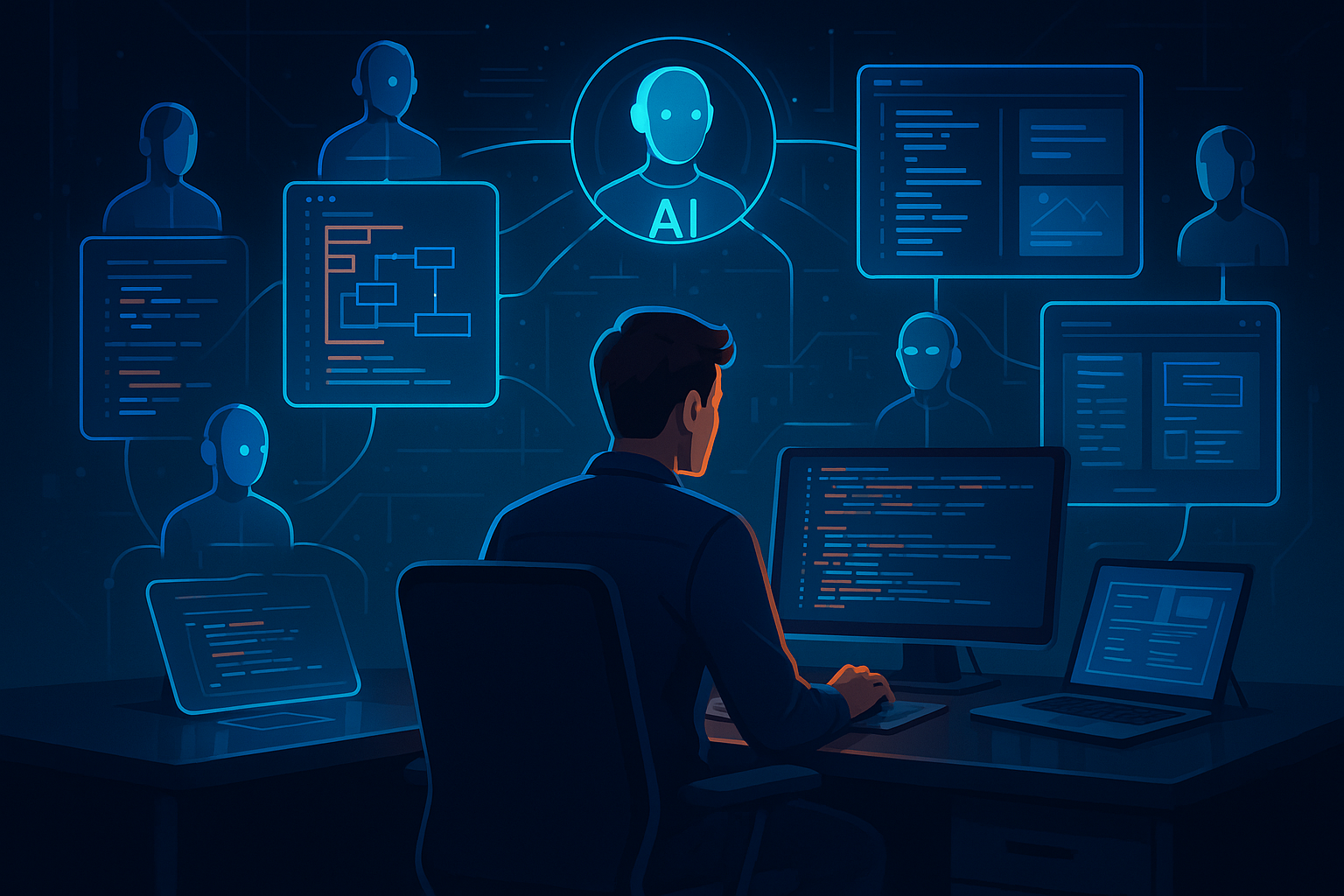
In 2026, the concept of “prompting” an AI feels as dated as using a stylus on a resistive touchscreen. We’ve moved past the era of begging a chatbot for a decent image; we are now in the age of the Agentic Creative Suite. While 2024 was about generating content, 2026 is about AI systems that understand intent, manage workflows, and execute multi-step creative projects while you sleep. The distinction between Generative AI and AI Agents has finally blurred into a single, seamless utility.
| Attribute | Details |
| :— | :— |
| Difficulty | Intermediate (Requires workflow integration) |
| Time Required | 15–30 minutes for initial agent setup |
| Tools Needed | Multi-modal Agents (OpenAI Operator, Claude Acts), Vector Databases |
The Why: From “Generation” to “Execution”
The problem with early generative AI was the “slot machine” effect. You pulled the lever (the prompt) and hoped the output was usable. If it wasn’t, you wasted ten minutes tweaking words.
In 2026, professionals have traded “chatting” for “delegating.” The creative tools hitting the market this year solve the problem of fragmented workflows. Instead of manually moving an AI-generated image into a video editor and then to a social scheduler, new Agentic AI frameworks handle the hand-offs. Systems like OpenAI Operator allow for the automation of these browser-based tasks, shifting the focus from simple creation to full execution. You aren’t just buying a tool that makes art; you’re hiring a digital staff that understands your brand’s visual DNA and applies it across every medium instantly.
Step-by-Step: Deploying Your First Agentic Creative Workflow
Forget one-off prompts. Follow this framework to set up an autonomous creative pipeline.
- Define the Persona Library. Don’t just ask for a “cool style.” Upload your brand’s past successful campaigns to your tool’s local vector memory. This ensures the AI isn’t guessing your aesthetic; it’s iterating on it.
- Chain the Objectives. Use an agentic orchestrator (like the new iterations of AutoGPT or specialized Adobe Sensei agents) to link tasks. For example: “Research current trending color palettes in the tech industry, design five social tiles, and draft the accompanying copy.” Companies are increasingly moving toward specialized AI agents that are purpose-built for these specific niche tasks rather than general-purpose bots.
- Establish Human-in-the-Loop Gateways. Set your agents to “Pause for Approval” at critical junctions. You want the AI to do the heavy lifting, but you must remain the final editor to ensure brand safety.
- Sync to Live Data. Connect your creative tools to your API feeds. If a product goes out of stock or a competitor launches a sale, your agentic tools can automatically pivot your creative assets in real-time without you lifting a finger.
- Audit the Output. Run a weekly “drift check” to ensure the AI isn’t becoming too repetitive or veering away from your original vision. This is part of a broader enterprise AI strategy where the focus is on governance and platform consistency rather than just individual model performance.
💡 Pro-Tip: Stop paying for “Full Access” seats for every team member. Most 2026 creative platforms now offer “Agent-Only” licenses at a 70% discount. These allow your autonomous scripts to pull API data without needing a full UI seat, saving you thousands in monthly SaaS overhead.
The Buyer’s Perspective: Agents vs. Generators
If you’re still looking at tools like the 2023 version of Midjourney, you’re behind. The market has split into two camps:
The Legacy Generators: These are the “toys.” They make pretty pictures but don’t talk to your other software. They are increasingly becoming features inside larger ecosystems rather than standalone products.
The Agentic Ecosystems: This is where the value lies. Tools like the 2026 Adobe Creative Cloud or the rumored “Apple Creative Intelligence” don’t just wait for commands. They suggest edits based on your previous behavior. The value proposition has shifted from “How many images can I make?” to “How many hours of manual labor can I eliminate?” We are seeing the rise of autonomous AI agents that function as persistent digital workers rather than reactive chatbots.
The downside? The “black box” problem is worse than ever. When an agent makes a hundred decisions on your behalf, troubleshooting a mistake becomes a forensic exercise.
FAQ
What is the actual difference between Generative AI and Agentic AI?
Generative AI creates content based on a specific prompt (a one-to-one relationship). Agentic AI uses reasoning to complete a goal by breaking it into smaller tasks and interacting with other software (a one-to-many relationship).
Will these tools replace junior designers in 2026?
They won’t replace designers, but they will replace the tasks juniors usually perform, like resizing assets or basic color grading. The “Junior Designer” role is evolving into an “Agent Manager.” This shift toward agentic workflows requires a new skill set focused on delegation and high-level auditing.
How do I protect my data when using agentic tools?
Ensure you are using “Private Instance” models. In 2026, most top-tier tools offer a “Zero-Retention” mode where your inputs are used for inference but never for training the global model.
Ethical Note: While these agents can mimic your creative style with startling accuracy, they still cannot legally claim copyright over their outputs, nor can they understand the deep cultural nuances of a human audience. The Disney and Universal sue Midjourney case from years ago continues to set the precedent for how intellectual property is handled in the age of automation.