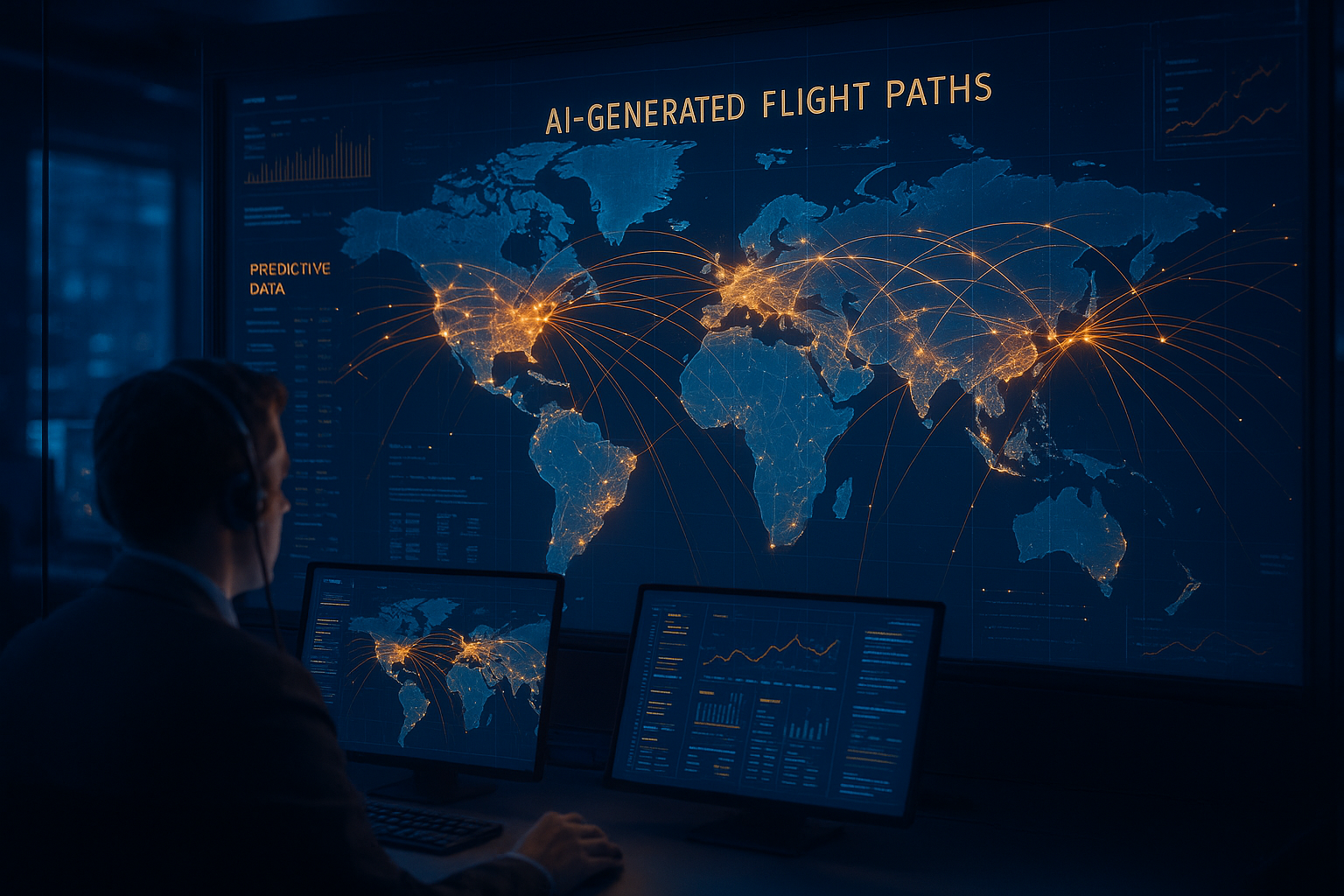
The Federal Aviation Administration (FAA) just learned a brutal lesson in timing: announcing a high-tech “cure” for delays on the same day the patient flatlines is a tough sell. As the agency unveiled its new AI-driven system designed to predict and mitigate flight bottlenecks, the East Corridor air traffic control system suffered a catastrophic meltdown. The result? A logistical nightmare that didn’t just strand vacationers—it diverted world leaders descending on New York for the UN General Assembly.
This irony highlights the massive gap between the promise of predictive AI and the brittle reality of our aging aerospace infrastructure.
| Attribute | Details |
| :— | :— |
| Difficulty | Intermediate (Understanding Aviation Data) |
| Time Required | 5-10 Minutes (For passenger impact) |
| Tools Needed | FAA Terminal Information, AI Prediction Models |
The Why: Why Modern Flight Prediction is Broken
Air travel isn’t just about planes in the sky; it’s a massive, multi-dimensional data puzzle. Weather, crew timing, mechanical health, and airspace congestion create a “butterfly effect” where a storm in Atlanta ruins a Tuesday morning in Boston.
Until now, the FAA relied on reactive systems. If a delay happened, the system adjusted. The new AI system represents a shift toward proactive management. It aims to digest decades of historical flight data alongside real-time variables to tell controllers where the “melt” will happen before the first plane is even fueled. The goal is to move from managing chaos to preventing it. This transition mirrors how other government agencies are evolving; for instance, the FDA launches a real-time, AI-powered monitoring system to eliminate safety lags in drug monitoring, showing a broader federal trend toward predictive analytics.
The How: Navigating the New AI-Driven Airspace
While you can’t control the FAA’s servers, you can use the same logic to navigate the skies more effectively.
- Monitor the “Flow Control” Data: Use sites like FlightAware or the FAA’s own National Airspace System (NAS) status page. Look for “Ground Stops” or “Delay Programs.” The AI now feeds these status updates, providing more accurate “end times” for delays than ever before. For a more conversational way to digest this travel data, some users are beginning to discover how Google Maps Gemini transforms navigation into a predictive travel experience that integrates real-time local updates.
- Verify via Predictive Apps: Tools like Flighty use the same machine learning protocols the FAA is adopting. Compare the airline’s “Everything is fine” notification with Flighty’s “Your plane is still in Philadelphia” alert. The AI usually wins.
- Choose “Early Bird” Routes: Data shows that AI-managed corridors are most efficient before 10:00 AM. As the day progresses, the variables become too volatile for even the best neural networks to stabilize.
- Leverage Rebooking Bots: If the FAA’s system predicts a massive East Corridor meltdown, use AI-powered travel assistants (like Google Flights or Hopper) to snag the last seat on a connecting flight through a different hub before the rest of the terminal realizes they’re stranded.
💡 Pro-Tip: If you see a “Ground Delay Program” issued for your destination airport three hours before your flight, don’t wait for the airline’s text. Call the carrier or use their chat app immediately to explore rerouting. AI prediction means the airline knows the flight is canceled long before they tell you.
The “Buyer’s Perspective”: Tech vs. Tarmac
The FAA’s move into AI is a desperate necessity. Our current Air Traffic Control (ATC) system is largely held together by tech that belongs in a museum. Competitors in the private sector, such as SpaceX and commercial airlines, have been using sophisticated algorithms for years to optimize fuel and routing.
The FAA’s system is meant to be the “source of truth.” However, as we saw with the East Corridor collapse, AI cannot fix a broken physical system. If the radar goes dark or the hardware fails, the smartest algorithm in the world is just a digital witness to the disaster. To ensure these systems remain functional, the industry is looking at how NVIDIA and global giants are launching AI-native 6G networks to turn static infrastructure into elastic, intelligent cloud software. The value proposition here isn’t “no more delays”; it’s “better managed expectations.”
FAQ
Can AI actually stop my flight from being delayed?
No. AI can only predict the delay and help the FAA reroute traffic to minimize the duration. It can’t stop a thunderstorm or fix a broken engine.
Why did the system fail during the East Corridor meltdown?
The AI is designed to predict traffic patterns, but it cannot prevent mechanical or systemic failures in the underlying air traffic control hardware. Similar challenges are faced in urban planning, where tools like Miovision Mateo are reducing traffic data analysis time to solve municipal bottlenecks, though they still rely on functioning physical sensors.
Will this make tickets cheaper?
Indirectly, yes. By reducing the time planes spend idling on tarmacs or circling in “holding patterns,” airlines save millions in fuel—costs that are eventually passed down to the consumer.
Ethical Note/Limitation: While AI can predict congestion, it currently lacks the nuance to prioritize specific flights (such as medical transports vs. commercial) without human intervention in the final decision loop.