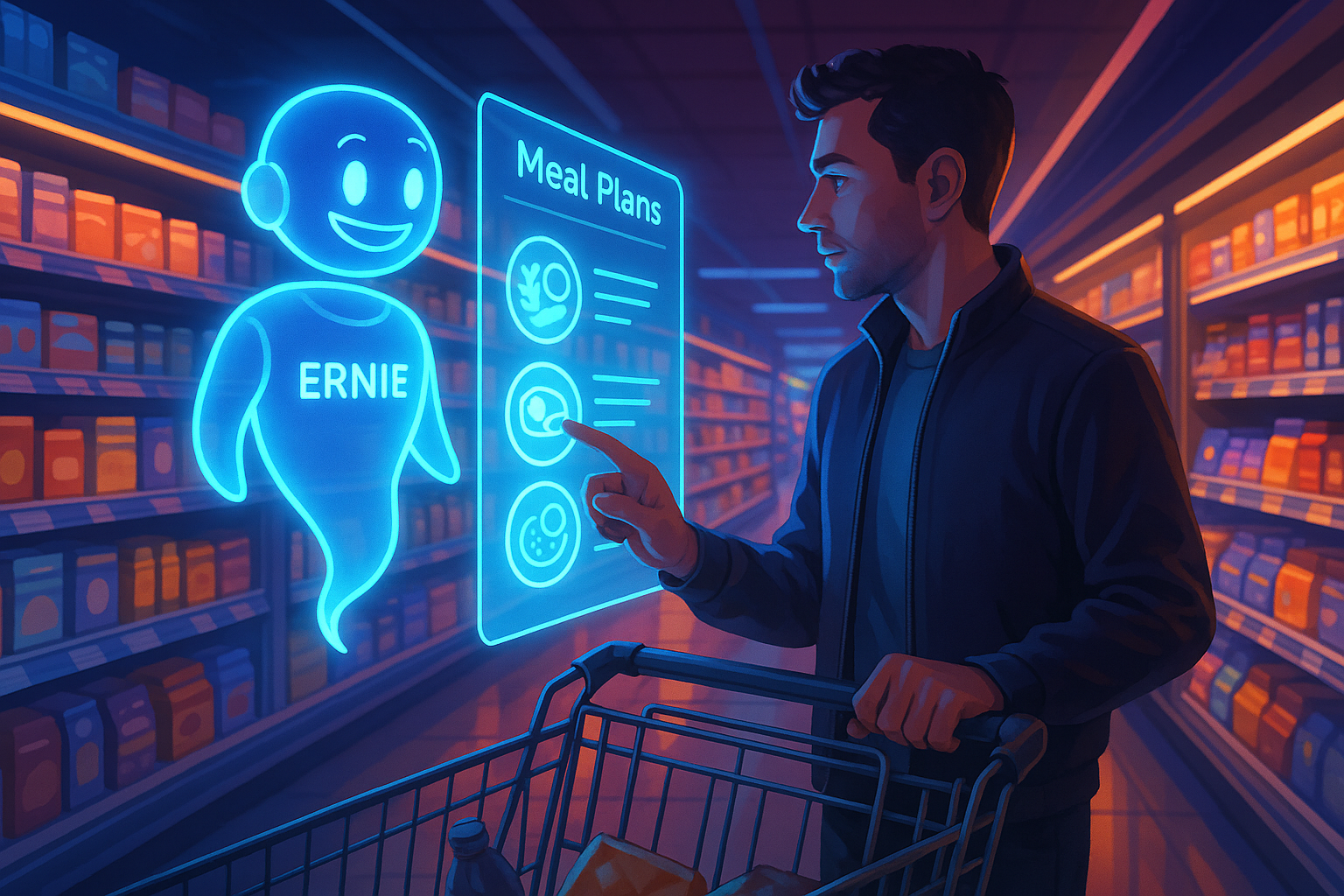
Your local grocery run is about to feel a lot more like a Silicon Valley demo. Strack & Van Til, a staple of the Northwest Indiana food scene, just launched “Ernie”—a generative AI concierge designed to navigate the aisles for you. But while the retail industry hails this as a breakthrough in “frictionless shopping,” the locals aren’t sold on digital cheese recommendations just yet.
Quick Stats: The AI Retail Shift
| Attribute | Details |
| :— | :— |
| Difficulty | Beginner (User-facing) |
| Time Required | 30 seconds to engage |
| Tools Needed | Smartphone / Mobile Web |
| Primary Goal | Personalized product discovery & store navigation |
The Why: Why an AI Concierge in a Grocery Store?
The grocery industry operates on razor-thin margins. Traditionally, stores competed on price and produce quality. Today, the battlefield has shifted to “cognitive load.” Retailers like Strack & Van Til realize that the modern shopper is overwhelmed by choice and paralyzed by “what’s for dinner?” syndrome.
Ernie isn’t just a search bar; it’s a generative agent. It’s designed to solve the “I have chicken and half a lemon, what can I make?” problem. By implementing Ernie, Strack & Van Til is betting that if they can reduce the mental effort required to shop, you’ll spend more time—and more money—in their aisles. They are following a trend set by giants like Walmart and Instacart, bringing high-end tech to regional, community-focused storefronts. This evolution is part of a broader trend where searching for products shouldn’t feel like coding, and retail brands are racing to lower the barrier for consumers.
How to Use Ernie for Your Next Run
Implementing a digital assistant into your routine doesn’t require a computer science degree, but getting the most out of it requires a specific approach to “prompting” your grocery store.
- Access the Interface: Scan the QR codes located throughout the store or visit the Strack & Van Til mobile portal. No app download is typically required for these web-based agents.
- Ask for Meal Solutions, Not Just Items: Instead of searching for “lettuce,” ask Ernie: “I’m hosting a BBQ for six people on a $50 budget. What should I buy?”
- Locate with Precision: Use the agent to bridge the gap between a recipe and the physical shelf. Ask for specific aisle locations to avoid the “aimless wander” through the middle of the store. This type of personalized shopping via Gemini Nano on-device is becoming the new standard for mobile retail interactions.
- Check for Daily Deals: Ask the agent for “unadvertised specials” or items nearing their sell-by date that are marked down—info that isn’t always clear on paper circulars.
💡 Pro-Tip: If you’re tracking macros or have allergies, feed those constraints to Ernie once at the start of your session. Ask: “I’m on a low-sodium diet; show me the best options in the deli section.” It’s faster than reading 50 labels. Using an Uber AI assistant for similar recipe-to-cart prompts has already shown how much time these tools can save.
The Buyer’s Perspective: Tech vs. Tradition
The retail tech industry is currently obsessed with “The Concierge Model.” On paper, it’s a win: customers get instant answers, and stores collect data on what people are looking for but can’t find.
However, the launch of Ernie highlights a massive disconnect between corporate strategy and local sentiment. Looking at early feedback from Northwest Indiana residents, the response has been lukewarm—bordering on frosty. Shoppers are raising a valid point: High-tech tools cannot fix low-tech problems.
If a store struggles with stocking fresh produce or managing expired inventory—two common complaints in the local community—a shiny AI agent can feel like a distraction rather than a solution. Ernie is better than a standard search bar because it understands natural language, but it’s worse than a human employee because it can’t physically check if the milk is leaking or if the strawberries in Aisle 4 are actually fresh. As AI shopping shifts billions in consumer spending, stores must balance these digital upgrades with real-world quality control to maintain customer trust.
FAQ: What You’re Actually Wondering
Will Ernie replace actual store employees?
Currently, no. Ernie is designed to handle “low-value” queries (e.g., “Where is the tahini?”) so that human staff can focus on stocking, checkout, and complex customer service.
Does this AI track my personal shopping habits?
Yes. Like any digital loyalty tool, these agents collect data on your preferences to build a “customer profile,” which helps the store with inventory forecasting and targeted advertising.
Can Ernie help me save money?
Potentially. By asking the agent to “build a meal plan under $20,” you can bypass the impulse-buy displays that are specifically designed to make you overspend.
Ethical Note/Limitation
Ernie can tell you where the cheese is, but it cannot guarantee that the cheese isn’t moldy; AI currently lacks the sensory hardware to perform real-world quality control.