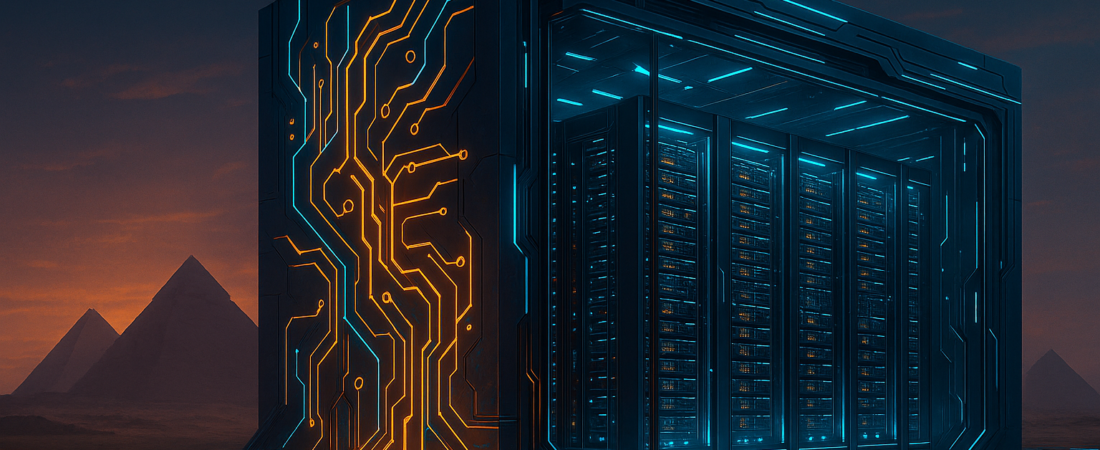
Egypt is no longer content being a mere bridge between continents; it wants to be the compute hub for the Global South. By announcing a massive $1 billion AI data center powered by Nvidia’s high-end silicon, Cairo is officially entering the sovereign AI race, signaling that the future of large language models (LLMs) isn’t just a Silicon Valley or Gulf State monopoly.
| Attribute | Details |
| :— | :— |
| Difficulty | Intermediate (Infrastructure & Geopolitics) |
| Time Required | 6 Minutes (Reading Time) |
| Tools Needed | Nvidia H100/Blackwell architecture, Sovereign AI Frameworks |
The Why: Compute is the New Oil
For decades, Egypt’s strategic value was tied to the Suez Canal. In the 2020s, that value is shifting toward data throughput and processing power. This $1 billion investment isn’t just about building a big room with fans; it’s a direct response to the massive compute deficit in North Africa and the Levant.
Currently, startups and governments in the region often rely on European or American cloud providers. This creates latency issues and, more importantly, “data sovereignty” anxiety. By building locally with Nvidia technology, Egypt aims to lower the barrier for local startups to train models in Arabic and African dialects while ensuring that sensitive national data stays within its borders. If you’re a developer in Cairo or Nairobi, your “ping” to the future just got a whole lot shorter. Egypt’s move is a significant step toward Global AI Sovereignty, ensuring the nation can develop high-performance models without total reliance on foreign exports.
How to Leverage Sovereign AI Infrastructure
While the hardware is being bolted into racks, businesses and developers should prepare to shift their workflows to take advantage of localized high-performance computing (HPC).
- Audit your data residency requirements. Determine which parts of your AI stack require low latency or must remain within regional jurisdictions for legal compliance.
- Optimize for Nvidia CUDA environments. Since this data center is built on Nvidia tech, ensure your proprietary models are optimized using TensorRT to squeeze every drop of performance out of the local H100 or Blackwell clusters.
- Prioritize regional dataset training. Use the localized compute power to fine-tune open-source models (like Llama 3 or Mistral) on localized Egyptian Arabic or regional business data, which is often underserved by “global” models.
- Connect via the Red Sea subsea cables. Egypt sits at the junction of 90% of data traffic between Asia and Europe. Use this infrastructure to build edge computing applications that serve both markets simultaneously. This trend of turning infrastructure into intelligent hubs mirrors how AI-native 6G networks are turning static towers into elastic, intelligent cloud software.
💡 Pro-Tip: Don’t wait for the ribbon-cutting. Start containerizing your workloads using Docker and Kubernetes now. Localized data centers often offer significant subsidies for early-stage “sovereign” projects, but they require your architecture to be portable and ready to migrate from AWS or Azure at a moment’s notice.
The Buyer’s Perspective: Egypt vs. The Gulf
This isn’t a solo act. Saudi Arabia and the UAE have already spent billions hoarding Nvidia chips to build their own “Falcon” and “Jais” models. So, where does Egypt fit?
- Cost vs. Raw Power: Saudi Arabia has the capital to buy the most chips, but Egypt has a massive, relatively low-cost pool of engineering talent. A $1 billion data center in Cairo might offer better ROI for companies looking for specialized AI services rather than raw, unbridled compute. This regional competition is part of a larger Sovereign AI infrastructure boom, where nations are challenging the traditional hyperscale monopoly.
- The Talent Play: While the UAE builds the “shiniest” tech, Egypt provides the “brains” that often run it. By placing the hardware where the developers live, Egypt reduces the “brain drain” to the Gulf.
- Infrastructure Reliability: The biggest hurdle for Egypt remains its power grid. While the UAE and Saudi Arabia have ultra-stable, fossil-fuel-backed energy for their centers, Egypt must prove its $1 billion investment includes the dedicated energy infrastructure to keep Nvidia’s power-hungry GPUs humming 24/7.
FAQ
Why does Egypt need its own Nvidia-powered data center?
To reduce reliance on foreign cloud providers, lower latency for regional tech hubs, and ensure that AI development reflects local culture and language.
How does this affect the price of AI services in the region?
Localizing compute usually lowers costs by removing international data transfer fees and allowing the government to offer subsidized rates to domestic startups.
Is this just for government use?
While national security and public services are priorities, the goal of a $1 billion investment is to create a commercial ecosystem that attracts international tech firms and local developers.
Ethical Note: While this infrastructure boosts regional innovation, localized data centers also give governments unprecedented centralized control over the data and the algorithms used by their citizens. To understand the legal complexities of these developments, it is helpful to look at how a Federal AI Framework is being proposed in other regions to streamline data centers and accelerate innovation while maintaining oversight.