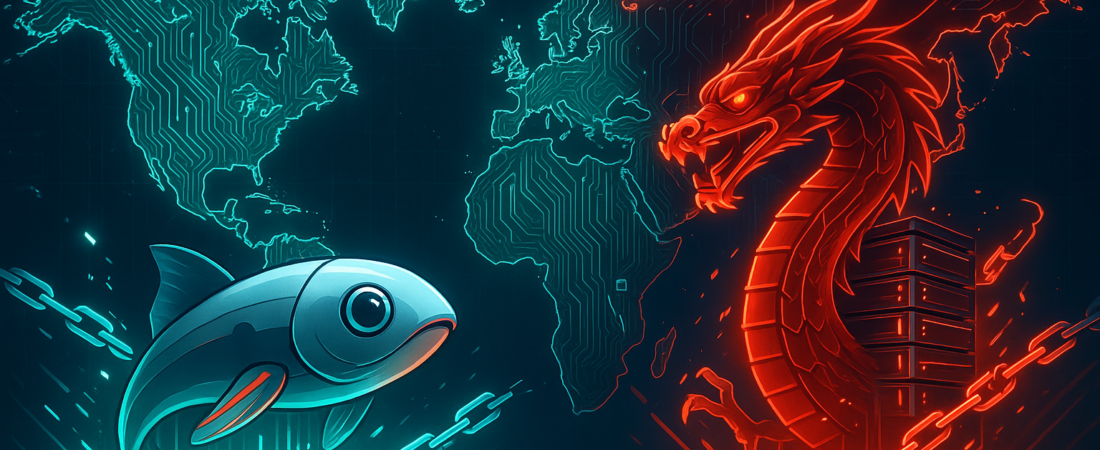
Silicon Valley just learned a hard lesson in digital geopolitics: isolation breeds self-sufficiency.
Two weeks ago, the Trump administration pulled the plug, abruptly banning Anthropic’s flagship “Mythos” and “Fable 5” models from non-American users. The goal was to freeze international progress. The result? A frantic, high-speed regional arms race. Today, Japanese and Chinese firms didn’t just fill the gap—they claimed to have matched the gold standard of American compute, rendering the export ban a very expensive paper tiger.
| Attribute | Details |
| :— | :— |
| Difficulty | Intermediate (Requires API knowledge) |
| Time Required | 15–30 minutes for initial setup |
| Tools Needed | Sakana AI (Fugu), 360 Tulongfeng, Python/Node.js |
The Why: Why Global AI Sovereignty Matters Now
When the US government deployed emergency national security export controls, it wasn’t just a political statement; it was a business catastrophe for thousands of firms relying on Anthropic’s infrastructure. Overnight, companies outside the US lost their “brain.”
This sudden vacuum created a massive incentive for regional players to stop being customers and start being competitors. For the busy professional, the message is clear: diversification isn’t just a luxury; it’s survival. Relying on a single US-based provider is now a high-risk gamble. This dynamic is a direct result of the shift toward a national AI framework that increasingly prioritizes border-locked security over globalized access. Japan’s Sakana AI and China’s 360 are offering the first real “hedged” alternative.
Step-by-Step Instructions: Implementing the New “Fugu” Orchestration Model
Japan’s Sakana AI isn’t just a chatbot; their new model, Fugu, is specifically engineered for autonomous agent orchestration. Here is how you can begin shifting your workflow to this non-US-controlled stack.
- Access the Sakana Hub: Navigate to the Sakana AI portal. Unlike US models, you don’t need a VPN or a US-based credit card to bypass regional locks.
- Initialize the “Orchestrator”: Use Fugu as your top-level model. Instead of giving it a simple prompt, give it a complex goal (e.g., “Conduct a security audit of this repository and patch the vulnerabilities”).
- Bridge via API: Connect Fugu to your existing local models. Fugu excels at “collective intelligence”—it manages multiple smaller, more efficient models to complete a task rather than trying to do everything itself. This approach aligns with the growing trend of multi-AI orchestration, where specialized models are synthesized for professional-grade results.
- Execute Locally: If you are concerned about data residency, deploy the Fugu-lightweight weights to your own hardware. This ensures your data never crosses a border.
💡 Pro-Tip: Use Fugu’s “cross-cultural” parameter. Because it was trained by former Google researchers specifically for Asian markets, it handles linguistic nuances in Japanese and Mandarin significantly better than Anthropic or OpenAI, which frequently “hallucinate” Western social norms into Eastern contexts.
The Buyer’s Perspective: Can They Actually Compete?
Anthropic’s Mythos was, until last week, the undisputed king of reasoning. The claims coming out of Tokyo and Beijing are bold, but do they hold water?
- Sakana’s Fugu: It isn’t trying to be a “better” poet than Mythos. It’s trying to be a better manager. Its success lies in efficiency. It uses a method called “Evolutionary Model Merging,” which lets it perform at high levels with a fraction of the power Mythos requires. If you need low-latency autonomous agents, Fugu is actually superior.
- 360’s Tulongfeng & Yitianzhen: These are sheer workhorses for cybersecurity. While Mythos is a generalist, 360 has built a specialist. Tulongfeng is designed specifically to hunt software vulnerabilities—a “strategic asset” in the words of founder Zhou Hongyi. This represents a significant milestone in China’s push for AI dominance, signaling a move toward high-performance independence. If your primary use case is SecOps, the Chinese models are arguably more surgical than the restricted US counterparts.
The bottom line: The US ban has cost American companies a $47 billion revenue run-rate and handed a massive market share to the very competitors it sought to stifle.
FAQ
Q: Are these models safe to use for Western companies?
A: Functionally, yes. However, compliance departments should evaluate data residency. While Sakana (Japan) aligns closely with US data standards, 360 (China) operates under different jurisdiction rules.
Q: Will Fugu work with my current LangChain or AutoGPT setup?
A: Yes. Because Sakana was co-founded by the researchers who literally wrote the “Transformer” paper at Google, their architecture is standard-compliant. Fugu is designed to be a “drop-in” replacement for restricted US APIs.
Q: Do I need a massive GPU rig to run Tulongfeng?
A: 360 offers a cloud-based tool (Yitianzhen) for real-time response, but Tulongfeng is a “frontier” model that generally requires enterprise-grade hardware or a dedicated cloud instance.
Ethical Note/Limitation: While these models claim “parity” with Mythos in reasoning, they still lack the massive, multi-modal human-feedback datasets (RLHF) that give Anthropic models their refined, “safe” conversational tone. This follows a broader trend where Anthropic’s Mythos has been closely guarded due to its hyper-advanced capabilities and potential risks.