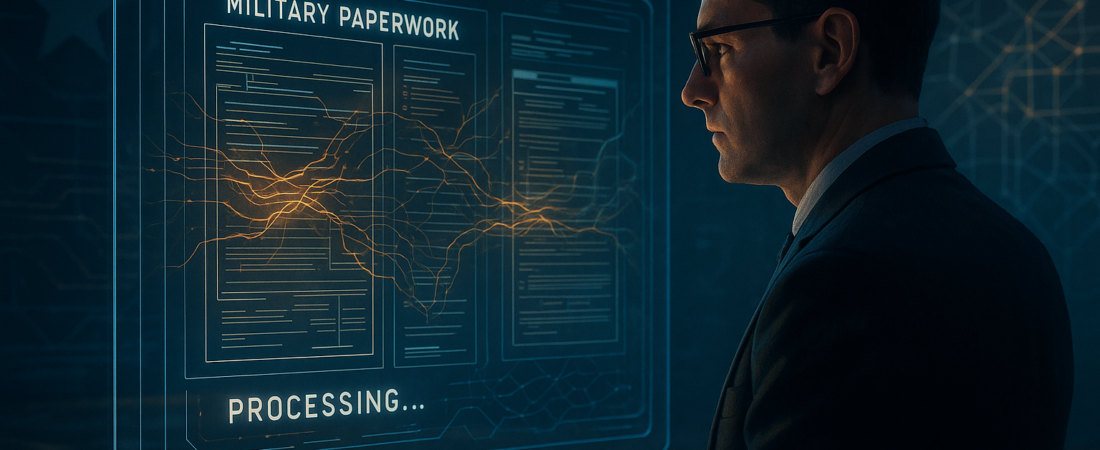
Bureaucracy is the one enemy the U.S. military has never quite managed to defeat. For active-duty troops, veterans, and their families, the “service” often involves a secondary mission: surviving an endless barrage of forms, claims, and administrative hurdles. But a new partnership between The AI Cowboys and C2H is signaling a shift in the theater of operations, moving generative AI from the tactical edge to the administrative back office.
They’ve launched a suite of Military AI Agents designed to do the one thing every veteran wishes they could: automate the paperwork without losing the human touch.
| Attribute | Details |
| :— | :— |
| Difficulty | Beginner (User-facing) / Intermediate (Integration) |
| Time Required | 5–15 minutes per filing |
| Tools Needed | C2H/AI Cowboys Platform, LLM Frameworks, Human Review Interface |
The Why: Death by a Thousand Forms
The problem isn’t just that there is a lot of paperwork; it’s that the stakes are incredibly high. A missed box on a VA claim or an incorrectly filed permanent change of station (PCS) voucher can result in thousands of dollars in lost benefits or months of financial strain.
Historically, solving this meant hiring more caseworkers—a solution that doesn’t scale. The AI Cowboys and C2H are betting that generative AI agents can act as a forced multiplier. These aren’t just chatbots; they are task-oriented engines that can parse complex military jargon, extract data from disorganized service records, and pre-fill documents with high precision. By tackling the administrative “grunt work,” these tools free up human advocates to focus on the nuances of a case rather than the data entry.
How to Deploy: Leveraging Military AI Agents
While the full backend is proprietary, the workflow follows a specific logic that any organization dealing with high-stakes documentation can learn from. Here is how the system streamlines the process:
- Ingest Service Documentation: Upload disparate PDF files, including medical records, discharge papers (DD-214), and orders. The AI doesn’t just “read” the text; it categorizes the data points chronologically.
- Identify Benefit Triggers: The agent scans the ingested data against current regulations and entitlement criteria to identify where a claim or form is actually required.
- Generate Draft Paperwork: The AI populates the necessary forms (like a Statement in Support of Claim) using the veteran’s actual history, ensuring the language aligns with what reviewers are looking for.
- Initiate Human-in-the-Loop Review: This is the critical step. No document is “final” until a human expert—a “Cowboy” or a C2H specialist—reviews the output for accuracy and legal compliance.
- Submit and Track: Once verified, the agent assists in the digital submission process, maintaining a log of all interactions for future audits.
💡 Pro-Tip: When using AI for sensitive records, always scrub Personally Identifiable Information (PII) like Social Security numbers before testing “sandbox” prompts. The best military-grade systems use “Air-Gapped” or “Stateless” API calls to ensure data isn’t used to train public models. This focus on AI safety protocols is essential when handling federal personnel files.
The Buyer’s Perspective: A New Standard for “Human-Reviewed” AI
In the current market, you’ll find plenty of “document AI” tools that promise to summarize PDFs. However, the C2H and AI Cowboys collaboration is different because it focuses on Accountable AI.
Most off-the-shelf LLMs (like standard GPT-4) struggle with “hallucinations”—making up facts that look real. In a military context, a hallucinated date or injury is a disqualifying error. By baked-in “Human-Reviewed” checkpoints, these agents solve the trust gap that keeps government agencies from fully adopting automation. This approach mirrors how the Pentagon integrates ChatGPT via secure, multi-model frameworks rather than public interfaces.
Compared to competitors who offer pure automation, this hybrid model is significantly more viable for high-stakes federal and veteran use cases. Dealing with an end to healthcare’s paperwork nightmare requires exactly this kind of specialized, grounded logic rather than general-purpose chat. It recognizes that while AI is faster than a human, a human is still the ultimate arbiter of truth.
FAQ: What You Need to Know
Is my data safe with these AI agents?
The partnership utilizes secure networks designed to handle sensitive military and veteran data, moving away from public-facing models to ensure privacy-compliant generative capabilities.
Can these agents guarantee my VA claim gets approved?
No. AI agents are efficiency tools, not legal guarantees. They ensure your paperwork is organized and accurate, which significantly reduces the chance of technical denials, but the final decision remains with the Department of Veterans Affairs.
Is this replacing human caseworkers?
Exactly the opposite. It’s designed to remove the “data entry” burden from caseworkers so they can handle more complex cases and provide actual emotional and strategic support to families.
Ethical Note: Current AI technology can assist in organizing and drafting claims, but it cannot interpret ambiguous laws or provide legal testimony without human oversight. For more on the strategic defense landscape, the Department of War agent network highlights how these technologies are being synchronized across different branches of service.