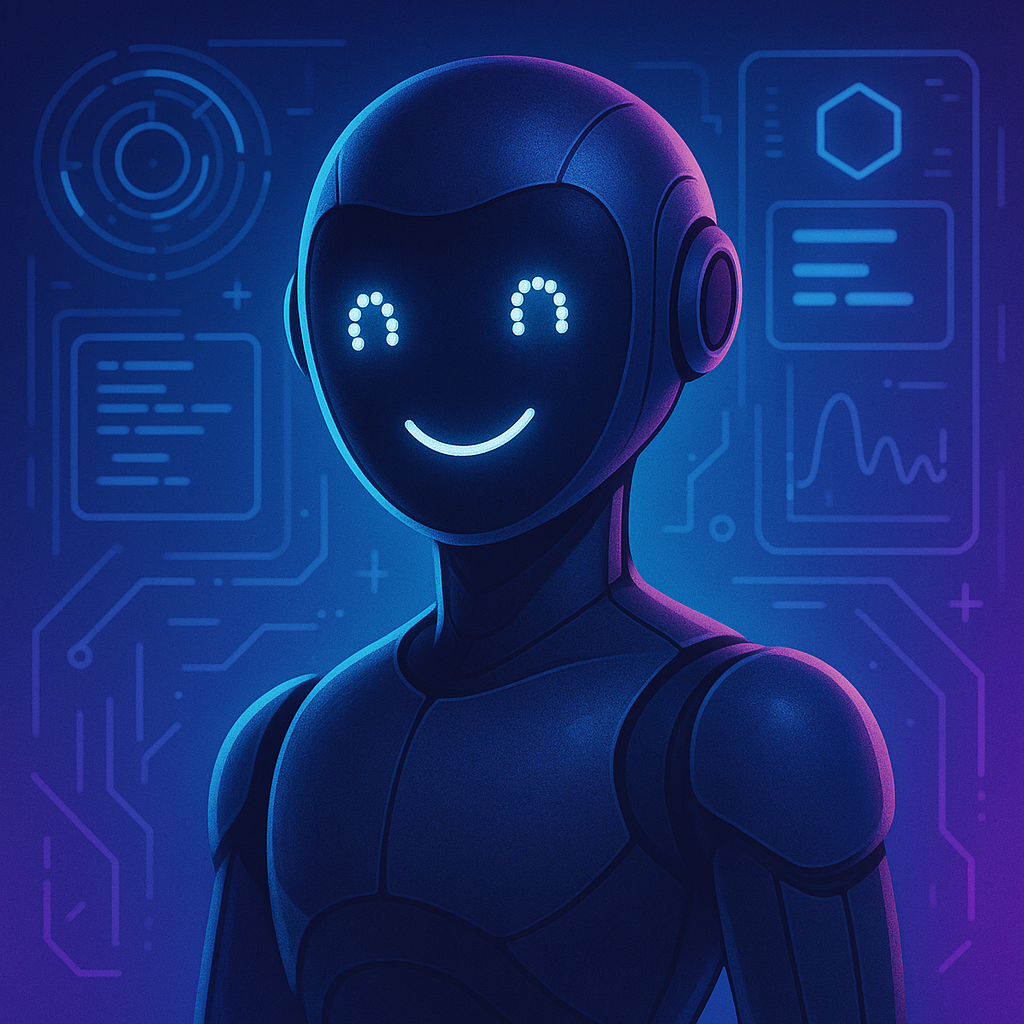
The era of the sterile, blinking cursor is dying. We are entering the age of the “vibey” agent. OpenAI just signaled a massive shift in how we interact with intelligence by launching “dots”—AI agents shaped like hearts, frogs, and clouds wearing berets. While the industry obsesses over compute power and parameter counts, the frontier of user adoption has moved to something much more human: personality and companionship.
| Attribute | Details |
| :— | :— |
| Difficulty | Beginner (User-facing) / Intermediate (Deployment) |
| Time Required | 5-10 minutes to set up a personal agent |
| Tools Needed | OpenAI Dots, Gemini 1.5 Pro, Claude (Anthropic) |
The Why: The Friction of Formality
For the last two years, AI has felt like a high-pressure exam. You stare at a blank box, trying to engineer the perfect prompt to get a useful result. This “command-line” anxiety prevents the average person from integrating AI into their daily life.
OpenAI’s introduction of “dots” and always-on personal agents (discussed by guests like Alexander Embiricos on the latest AI Vaults) solves the engagement problem. By giving an agent a face—specifically a “cute” one—OpenAI is lowering the barrier to entry. We don’t just want a calculator; we want a digital sidekick that feels approachable. Meanwhile, Google and Anthropic are focusing on the “gated” side of the house—ensuring that while the front end looks friendly, the back end is fortified against cyber threats.
Step-by-Step: Implementing Always-On Agents
If you want to move beyond basic chatting and start using these new, persistent agents effectively, follow this workflow.
- Define the Persona: Choose an agent shape or personality that matches the task. A “cloud in a beret” might be your creative brainstorming partner, while a more structured “dot” handles your scheduling.
- Enable Persistent Context: Grant the agent permission to “lurk” or stay active in the background. This allows it to learn your habits without you needing to re-explain your preferences every session.
- Bridge the Gaps: Use tools like Castmagic to turn your ambient conversations or meetings into structured data that these agents can actually use.
- Implement “Step-Back” Prompting: When your agent gets stuck, use a “step-back” prompt. Ask it to identify the high-level concepts involved in your request before it attempts to solve the specific problem. This significantly reduces hallucinations.
- Audit the Output: Even if the agent looks like a friendly heart, treat its data output with professional skepticism.
💡 Pro-Tip: Use “Step-Back” prompts not just for logic, but for style. Before asking an agent to write a report, ask it to “Outline the three core principles of a Wired-style technology article.” This forces the model to load the correct stylistic weights before it starts generating text.
The Buyer’s Perspective: Aesthetics vs. Armor
We are seeing a divergence in the market.
OpenAI is winning the Consumer Experience (CX) war. Their focus on “dots” and personality makes ChatGPT feel like a companion. It’s a brilliant play for retention; it’s much harder to cancel a subscription to a “friend” than a software utility.
Google, however, is playing the Security Long-Game. By giving their “Argon” (Gemini 4) models to cyber defenders first, they are positioning themselves as the “adult in the room.” If you are a CISO, you care less about cloud berets and more about whether your LLM can catch a SQL injection before it hits production.
Anthropic sits in the middle, investing $100 million into Human Capital. They aren’t just selling a model; they are subsidizing the training of the engineers who deploy it. This suggests that Claude’s value proposition isn’t just the “what,” but the “how.”
FAQ
Q: Are these “dots” just skins for ChatGPT?
A: No. They represent a shift toward specialized, autonomous AI agents that maintain state and personality across different sessions, rather than starting fresh every time.
Q: Why did OpenAI apologize to Australia?
A: The apology stemmed from regional rollout delays and compliance hurdles. It highlights the growing tension between rapid AI deployment and national digital sovereignty laws.
Q: Is Google’s “Argon” available for public use?
A: Not yet. It is currently gated for cyber-security professionals to stress-test defense capabilities before a wider enterprise release.
Ethical Note: While “cute” interfaces make AI feel safer, they can also mask the underlying biases and data privacy risks inherent in always-on surveillance agents.
To learn more about how these new systems are being integrated into professional workflows, explore how OpenAI Dots and GPT-6.1 Sol are shifting the industry from simple chatbots to complex agentic systems.