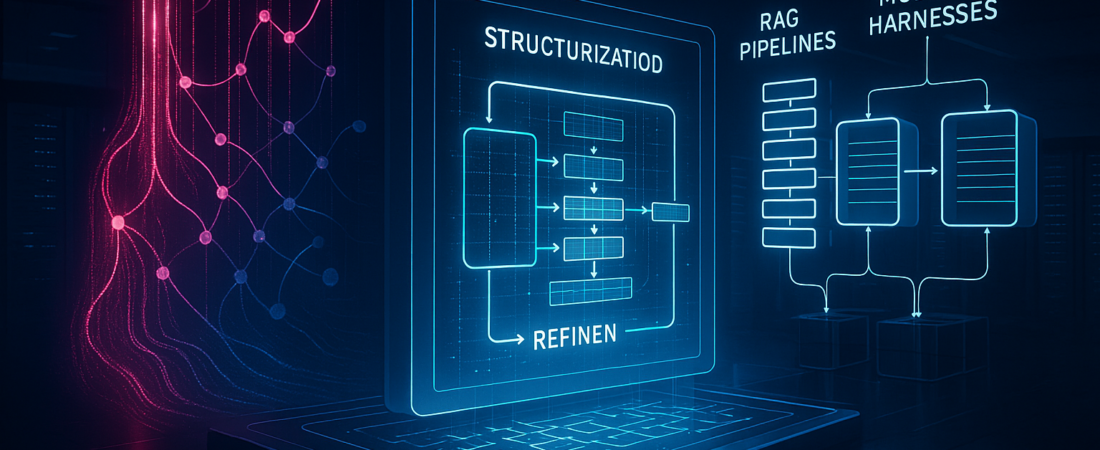
T-Mobile isn’t just trying to “do” AI; they are trying to industrialize it for 100 million subscribers without breaking the bank or the brand. Most companies are stuck in “pilot purgatory,” playing with isolated chatbots that never see the light of day. T-Mobile is doing the opposite: building a centralized AI clearinghouse where every model, agent, and RAG pipeline must pass a rigorous engineering gauntlet before reaching the enterprise.
If you’ve been waiting for the moment AI moves from “experimental toy” to “critical infrastructure,” this is it.
| Attribute | Details |
| :— | :— |
| Difficulty | Advanced (Senior Engineering Focus) |
| Time Required | 3-5 Years Industry Experience |
| Tools Needed | LangChain, Python, RAG Frameworks, Vector DBs (Pinecone/Weaviate) |
| Compensation | $126k – $228k (Total Target Cash) |
The Why: The End of “Shadow AI”
The honeymoon phase of generative AI—where employees sneakily use ChatGPT to write emails—is over. For a telecom giant, the risks are astronomical: data leaks, “hallucinating” customer support agents giving away free phones, and skyrocketing token costs.
T-Mobile is solving this by creating an AI Platform & Risk Team. This isn’t a research lab; it’s a traffic control tower. By hiring across four distinct roles—Platform Configuration, Agent Risk, and Model Evaluation—they are signaling that the future of AI isn’t just about building the smartest bot. It’s about building the most reliable system to manage thousands of bots. They need engineers who care as much about latency and security as they do about large language models. This shift represents a broader enterprise AI strategy where platform stability and infrastructure take priority over simple model leaderboards.
How to Scale Enterprise AI: The T-Mobile Blueprint
To replicate this level of institutional AI readiness, you need to move beyond simple API calls. Here is how T-Mobile is structuring their implementation:
- Centralize the Model Harness: You don’t let every department pick their own LLM. T-Mobile uses an evaluation harness to benchmark Claude against OpenAI and others, using evidence-based “model cards” to decide which tool fits which task. Understanding what is an agent harness is becoming the secret sauce for teams building secure, predictable, and enterprise-ready infrastructure.
- Deploy RAG at Scale: Forget basic prompts. You must design Retrieval-Augmented Generation (RAG) pipelines that ground AI responses in actual enterprise knowledge. This means mastering vector databases and embeddings so the AI doesn’t make things up.
- Implement Active Monitoring: You need systems that scan for “agent drift.” If an agent starts burning too many tokens or its accuracy dips below a threshold, the system should flag it for remediation automatically.
- Operationalize Safety: Security isn’t an afterthought. The goal is to build guardrails directly into the infrastructure so that “safe rollout” is a default setting, not a manual check. As companies move toward autonomous labor, they must prioritize agentic AI security to protect dev workflows from prompt injections and unauthorized commands.
💡 Pro-Tip: When building RAG pipelines, don’t just dump documents into a vector store. Use Metadata Filtering. By tagging your data chunks with source, date, and department, you can force the LLM to only look at the most relevant “verified” slices, drastically reducing hallucinations and token waste. To ensure these systems remain accurate, many organizations are turning to an AI Knowledge Hub to connect their models to a single, governed source of truth.
The Buyer’s Perspective: Career vs. Hype
For an engineer, the value proposition here is scale. Working on AI at a startup is fast, but working on AI at T-Mobile means your code impacts one of the largest datasets in the world. This is especially relevant as telecommunications giants begin to deploy AI-native 6G networks, turning static towers into intelligent cloud software.
Compared to big tech competitors like Google or Meta—where you might be a small cog in an ad-optimization engine—T-Mobile’s “Un-carrier” approach to AI is about operational utility. They aren’t trying to build AGI; they are trying to automate complex service workflows. The $228k top-end salary reflects the scarcity of talent that understands both the “science” of AI and the “plumbing” of cloud infrastructure. If you’re a Python expert who knows LangChain and doesn’t mind the rigors of a highly regulated telecom environment, this is a top-tier landing spot.
FAQ
Q: Do I need a PhD to work in AI at this level?
A: No. T-Mobile specifically asks for a Bachelor’s degree and 3 years of experience, or an advanced degree and 1 year. They value “deployed models” over academic papers.
Q: What is the most critical skill for these roles?
A: LLM Orchestration. It’s not just about writing a good prompt; it’s about using frameworks like LangChain or ADK to connect the LLM to databases, APIs, and safety filters. This is part of the Agentic AI shift, where the focus is on autonomous agents that execute complex workflows across enterprise applications.
Q: Is this a remote role?
A: The posting lists specific locations and notes that while travel isn’t required, you should check the local pay ranges, suggesting a hybrid or office-linked structure depending on the hub.
Ethical Note: While these AI systems can significantly boost efficiency, they currently cannot replace human judgment in nuanced legal or high-stakes ethical decision-making without significant oversight.